Artefact’s staff reflects on AI’s potential impact on individuals and society by answering questions prompted by the Tarot Cards of Tech. Each section contains videos that explores a tarot card and provides our perspectives and provocations.

The Tarot Cards of Tech was created to help innovators think deeply about scenarios around scale, disruption, usage, equity, and access.  With the recent developments and democratization of AI, we revisited these cards to imagine a better tech future that accounts for unintended consequences and our values we hold as a society.

Cultural implications for youth

Jeff Turkelson, Senior Strategy Director

Transcript: I love that this card starts to get at, maybe some of the less quantifiable, but still really important facets of life. So, when it comes to something like self-driving cars, which generative AI is actually really helping to enable, of course people think about how AI can replace the professional driver, or how AI is generally coming for all of our jobs.

But there are so many other interesting implications. So for example, if you no longer need to drive your car, would you then ever need to get a license to drive? And if we do away with needing a license to drive, then what does that mean for that moment in time where you turn 16 years old and you get newfound independence with your drivers license? If that disappears, that could really change what it means to become a teenager and become a young adults, etc. So what other events or rituals would AI disrupt for young adults as they grow older?

Value and vision led design

Piyali Sircar, Lead Researcher

Transcript: This invitation to think about the impact of incorporating gen AI into our products is really an opportunity to think about design differently. We should be asking ourselves, “What is our vision for the futures we could build?” and once we define those, the next question is, “Does gen AI have a role to play in enabling these futures?” Because the answer may be “no”, and that should be okay if we’re truly invested in our vision. And if the answer is “yes”, then we need to try to anticipate the cultural implications of introducing gen AI into our domain space. For example, “How will this shift the way people spend time? How will it change the way they interact with another? What do they care about? What does this product say about society as a whole?” Just a few questions to think about.

Introducing positive friction

Chad Hall, Senior Design Director

Transcript: The ‘Big Bad Wolf’ card reminds me to consider not only which AI product features are vulnerable to manipulation, but also who the bad actors might be. Those bad actors could be a user, it could be us, our teams, or even future teams. So, for example, while your product might not misuse data now, a future feature could exploit it.

A recent example that comes to mind is two students who added facial recognition software to AI glasses with a built-in camera. They were able to easily dox the identities of just about anyone they came across in their daily life.

I think product teams need to introduce just enough positive friction in their workflows to pause and consider impacts. Generative AI is only going to ask for more access to our personal data to help with more complex tasks. So the reality is, if nobody tries to ask the question, the questions are never going to get asked.

Minimizing harm in AI

Neeti Sanyal, VP Creative

Transcript: I think it’s important to ask whether AI could be a bad actor? Even when you’re not trying to produce misinformation with generative AI, in some ways it is inherently doing that. I am concerned about the potential for generative AI to cause harm in a field that has low tolerance for risk, things like health care or finance. An example that comes to mind is a conversational bot that can give the wrong mental health advice to someone that is experiencing a moment of crisis.

One exciting way that companies are addressing this is by building a tech stack that uses both generative and traditional AI. And it’s the combination of these techniques that help minimize the chance of hallucinations and can create outputs are much more predictable.

If we are thoughtful in how the AI is constructed in the first place, we can help prevent AI from being the bad actor.

Building job security

Rachael Cicero, Associate Design Director

Transcript: One thing we keep hearing about is the disappearing workforce, but often I think we’re overlooking the fact that humans will continue to exist in and contribute to society. Instead, I’d like to see a shift the conversation from the disappearing workforce to the unique contributions of human and AI collaboration. Consider civic technology, where generative AI can be used for things like supporting the process of unemployment applications. AI can help with document recognition, which can really reduce the load on human staff, and also accelerate response time for applicants. To me, that collaboration isn’t about replacing jobs but really about enhancing them.

The key to that is investing in reskilling. By including the perspectives of people affected in the design of AI systems, we can better understand the tasks they want automated. The goal being to create a future where AI and humans can work together, enhancing each other’s strengths, and ensuring that everyone has an opportunity to thrive in a pretty evolving job market.

Transforming tradition

Max West, Principal Designer

Transcript: This card reminds me of how cable TV technology reshaped media jobs. Remember Video Jockeys on the popular 90s MTV show, Total Request Live? VJs had evolved from selecting and remixing music, like their traditional radio counterparts, to focusing on engaging with crowds, talking to celebrities, and orchestrating pop cultural moments. 

Now take the cable TV example and apply it to AI transforming an industry like education. Teacher’s jobs could similarly shift to a more social focus. An AI-powered app could tailor a math or science lesson to a student’s unique cognitive abilities, while the teacher can focus more on the physical, interpersonal, and social aspects of learning. In the same way that VJs would provide crowd-pleasing moments between music videos, educators might find themselves in a similar “hosting” role for the classroom.   


So it’s less about what disappears and more about what can transform. So, while roles may change with AI, it could create time and space for richer, more personal experiences among groups.

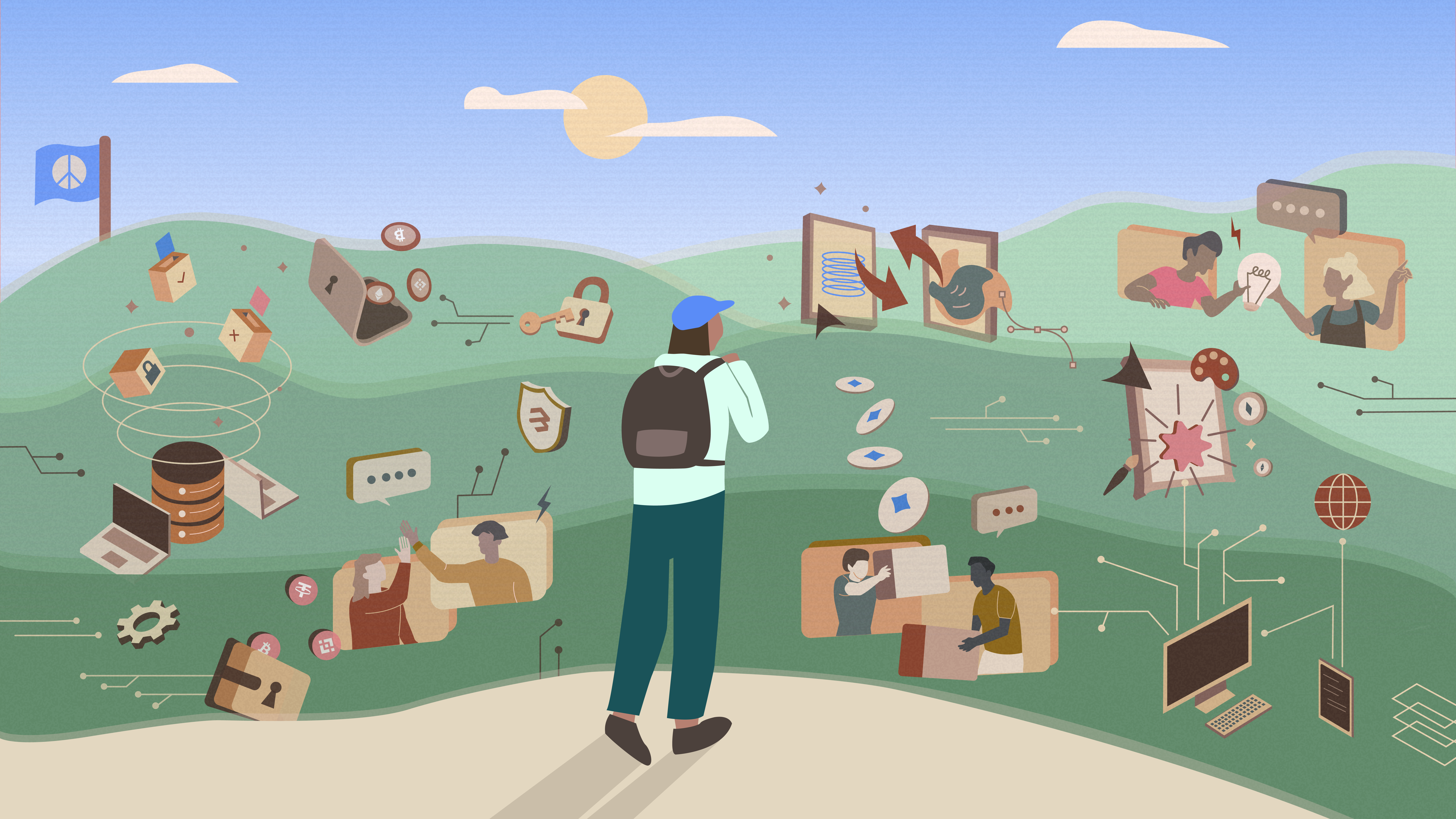
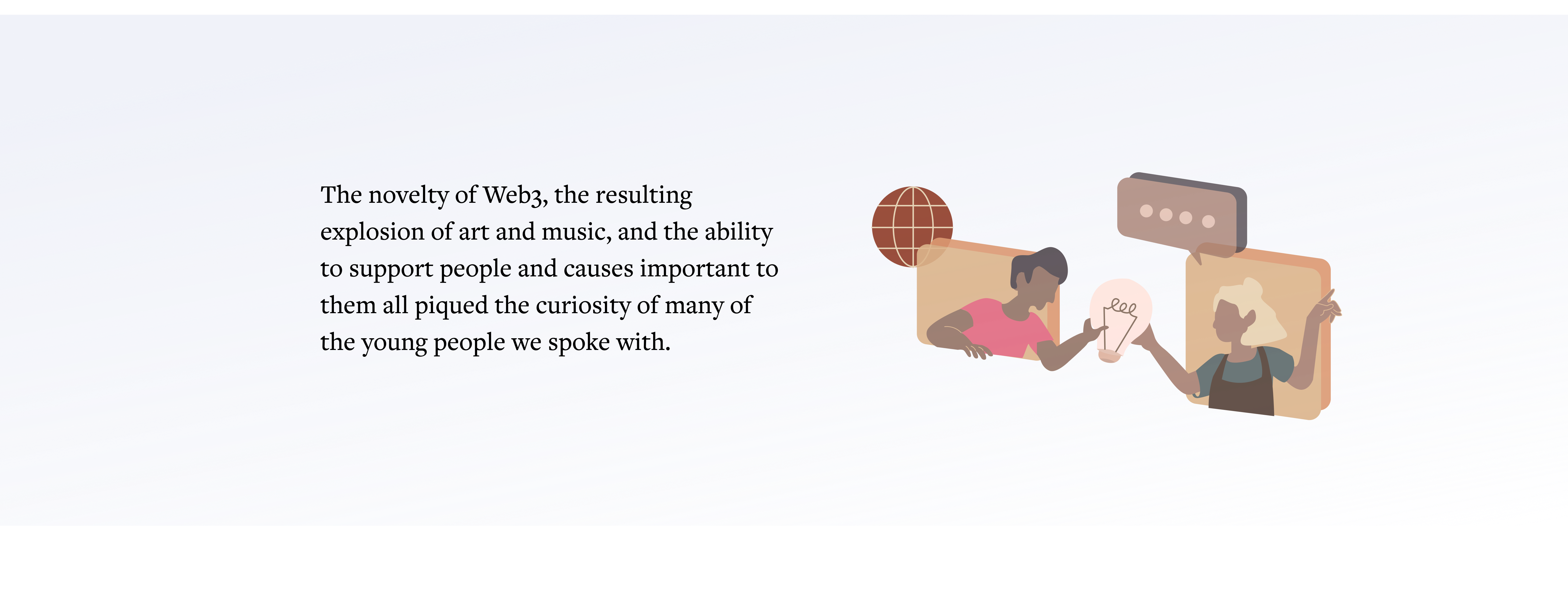
A vector illustration depicting a person venturing towards a Web3 landscape

Developing Skills and Earning a Livelihood

Whether it’s NFTs, Web3 or AI, the rapid evolution of technology can offer opportunities for users of all ages, but young people – who spend so much of their time online – have a unique relationship with these emerging tools. And, despite what many think, adolescents are already using these emerging technologies to improve their well-being at a time where the mere existence and lived experiences of BIPOC and LGBTQ+ youth, especially, are under attack.

Take 13-year-old digital artist Laya Mathikshara from Chennai, India, for example. In May 2021, as a neophyte in the world of digital art, she sold her first NFT.

Her animated artwork titled What if, Moon had life? depicted an active core of the Moon gurgling. Inspired by the distance between the Earth and the Moon (384,400 km), Laya listed the reserve price as 0.384400 ETH (Ethereum) on Foundation, a platform that enables creators to monetize their work using blockchain technology. It caught the eye of Melvin, co-founder of the NFT Malayali Community, who placed a bid and collected her first artwork for 0.39 ETH ($1,572 at the time).

After the sale, and the success of subsequent NFTs, Laya – now 15 years old – decided to make digital art her career. With Web3, a collector of her art introduced her to other artists, who she felt inspired to support through Ethereum donations. It “feels amazing to help people and contribute. The feeling is awesome,” she says.

“I started with nothing to be honest,” says Laya, “with zero knowledge about digital art itself. So I learned digital art [in parallel to] NFTs because I had been into traditional art [when I was younger].”

Supporting Key Developmental Assets to Wellbeing

Knowing that young people spend much of their unstructured time online, that digital wellness is a distinct concern for Gen Z, and that the technology landscape is rapidly changing, Artefact partnered with Hopelab to conduct an exploratory study to understand their experiences with emerging technology platforms – ones largely enabled by Web3 technologies like blockchain, smart contracts, and DAOs (decentralized autonomous organizations). The organizations were particularly interested in how these technologies might contribute to a wide spectrum of developmental assets to improve the well-being of young people.

Our study found that Web3 can support youth wellness because it is built on values such as ownership, validation, and community that link to developmental assets like agency and belonging. These values are fundamentally different from the values of Web 2, a technology operating on business models that monetize our attention and personal data.

Awareness and usage of Web3 technologies is already high among Gen Zers, with 55% in the U.S. claiming to understand the concept of Web3. Twenty-nine percent have owned or traded a cryptocurrency and 22% have owned or traded an NFT. Importantly, Gen Z believes these technologies are more than a fad: 62% are confident that DAOs will improve how companies are run in the future.

Having grown up with multiple compounding stressors including climate change, a global pandemic, and political unrest, some Gen Z find appeal in Web3’s potential to create what you want, own what you make, support yourself, and change the world.

With Web3, young people are experimenting with their interests and identities, creating art and music, accumulating wealth, consuming and sharing opinions, forming communities, and supporting causes that deeply resonate with them.

Victor Langlois and LATASHÁ, visual and musical artists, respectively, each represent the diversity that is important to our organizations, and have made real income at a young age through NFTs. Likewise, World of Women, a community of creators and collectors believe representation and inclusion should be built into the foundation of Web3, while UkraineDAO seeks to raise money to support Ukraine.

Aligning with GenZ Values

The gateway to Web3 for youth has commonly been through media hype, celebrity fanfare, and video games. Youth we spoke to were all skeptical, at least at first. Laya says, “I thought it was some cyber magical money or something. It just didn’t feel real.” After learning how to use the technology to create assets themselves and even make money via NFTs without a bank account, they began to invest more time experimenting with the tech and consuming content.

These experiences are not without challenges, of course. Young people in our study shared that they need to spend a lot of time learning about the ever-evolving space and building connections to stay relevant. The financial ups and downs are more extreme than the stock market, along with the potential for major losses at the hands of scammers or platform vulnerabilities. Like Web2, there is pressure to be endlessly plugged into the constant news, with social capital to be gained by being consistently online. Some of society’s broader social issues also permeate Web3 spaces: racist NFTs and communities abound.

Despite these challenges, there is genuine excitement for a new internet built on Gen Z’s core values. Several youth shared how DAOs are flipping organizational norms, where hierarchy and experience no longer determine whether your idea takes hold. Web3 technologies are giving youth an opportunity to start careers that weren’t previously viable, find new audiences and fanbases, create financial independence, detach from untrustworthy platforms, and find and contribute to caring communities – all while building their creativity, socioemotional, and critical thinking skills online.

These experiences are helping Gen Z feel a strong sense of belonging as they find communities and causes they care about. In the words of one of our interviewees, Web3 offers a “new and shiny” way to “do good in the world.” The experiences are more accessible – and specific to them – and the decentralized nature of Web3 means that creators and the public, not big tech or its algorithms, get to determine what is current and relevant. This is especially important for creators from groups that have been excluded from power because of their race, ethnicity, gender, or orientation. One participant shared how empowering it was to no longer be at the whim of social media platforms that may make design changes that erase your content, user base, or searchability overnight.

Like any other technology, Web3 and its components can have positive and negative impacts, but its fundamental tenets mean that we will likely see promising innovations and experiences that can support young people to find agency and belonging.

“We are all decentralized for the most part,” says Laya. “And the fun fact is, I have not met many of my Indian friends…I haven’t met folks in the U.S. or any other countries for that matter… you don’t even have to connect to a person in real life, but you still feel connected.”


Neeti Sanyal is VP at Artefact, a design firm that works in the areas of health care, education, and technology.

Jaspal Sandhu is Executive Vice President at Hopelab, a social innovation lab and impact investor at the intersection of tech and youth mental health.

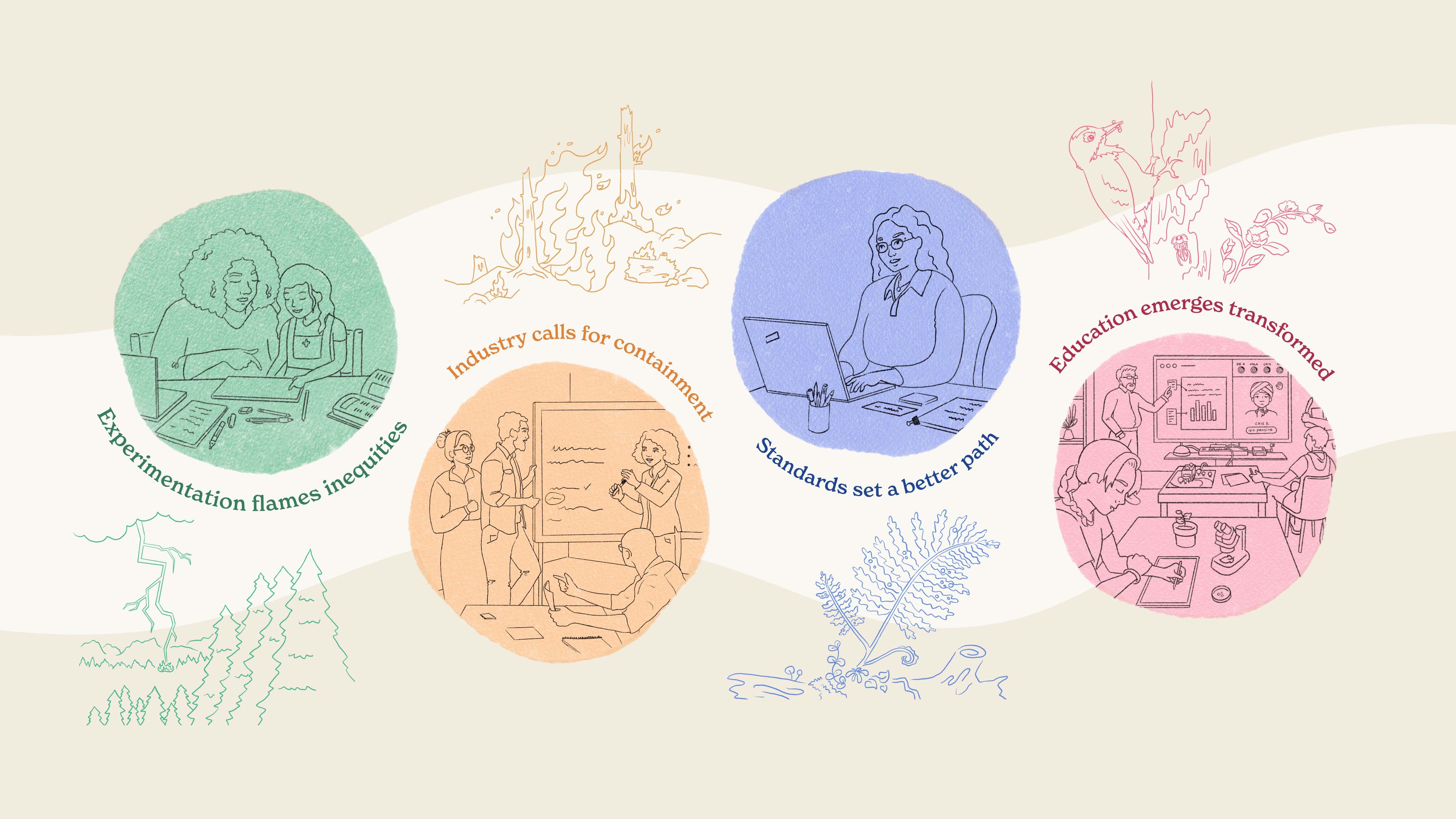
An illustration showing four future scenarios for the impact of deployment of AI in education.

The K-12 education sector is at a unique inflection point as digital technologies radically reform how students learn, how educators teach, and how organizations adapt to serve the needs of increasingly diverse student populations. The future of learning may look radically different from today. Recent rapid advances in AI have made many leaders pause to question how such a transformative leap in technology will impact their organization, its people, and its stakeholders in both the near term and the long term.

In this white paper, Artefact developed four future scenarios to understand the impact of AI in the K-12 education sector from a variety of perspectives, including students, parents, teachers, administrators, and tech industry professionals. Each of the scenarios come with a set of ethical and equity considerations that result from how technological and societal trends interact in various ways. This work builds on our expertise in user experience design and strategic foresight and our experience working in the education sector.

At Artefact, we believe in the powerful impact that strategic foresight and design has on an organization’s long-term success. By exploring possible futures, we hope to help you spark critical conversations and strategic planning across your team to ensure equity, inclusion, and innovation as your organization evolves alongside AI. Our white paper also includes a discussion guide to help get those initial conversations off the ground.

Grab your copy of the white paper and reach out to see how Artefact can help you manage transformational change affecting your business today.

Partnership Highlight

This year, Artefact had two opportunities to partner with mission-driven organizations to understand young people’s relationship with digital technology and how they can support their efforts to shape a better future. In celebration of those partnerships with Omidyar Network and Hopelab, we highlight our approach to centering young people’s perspectives as we implemented our research and structured our recommendations.

“Our partnership with Artefact has helped us clarify how we can take action and support youth who are creating opportunities for inclusion and well-being in the next digital era. We appreciate the team’s depth of research, and their responsiveness to emergent opportunities in the work.”

Young people and the hope for a new digital future

Youth are growing up in a vast digital system with a level of complexity that we haven’t seen before. Many features on today’s major tech platforms keep youth online by design, depleting their energy and consuming their attention. Combined with the short life cycle of pop culture and the fear of missing out, young people – especially Gen Z – are aggressively pulled online, affecting their productivity, mental health, and overall wellness. These effects will likely persist with emerging technologies such as the metaverse and web3. Still, young people are capitalizing on this ‘new tech’ to have a role in shaping a more accountable, equitable, and inclusive internet for themselves and future generations.

An inclusive, systems approach to understanding youth beliefs and behaviors

Omidyar Network and Hopelab each needed actionable insights to develop a holistic strategy and prioritize actions aimed at influencing and activating technology as a force for good in supporting young people. However, the focus of each organization’s effort was slightly different. Omidyar Network focused on identifying the core issues that animate digital native activism and organizing as it relates to technology. These issues ranged from digital rights to social justice to tech worker activism. In contrast, Hopelab concentrated on understanding how emerging technologies can uplift or detract from youth mental health and well-being.

Throughout each project, we took inspiration from well-established fields such as inclusive design and human-centered design, incorporating equitable methods affording continuous participation for internal and external stakeholders.

Participatory methods to engage internal and external stakeholders included:

  • Using simple tools like Dovetail to convey research insights and allow stakeholders to view secondary research and highlight reels of key topics discussed during 1:1 interviews
  • Hosting multiple workshops to review research insights, co-create opportunity areas, and develop critical actions
  • Hosting office hours for youth and key internal stakeholders to give feedback, check assumptions, and develop actionable priorities
  • Sharing research insights and project outcomes with internal and external stakeholders to keep participants informed, give transparency to our processes, and solicit feedback to ensure data points were representative of their voices

In addition, we took a systems approach in selecting research participants to holistically understand how youth are affected by the internet and what they are doing to take control of their future. This approach helped us understand the nuances and complexity of this problem space through various perspectives.

An overview of who we spoke to:

  • BIPOC + Youth Digital Creators
  • Digital Rights Youth Activists
  • Web3 Designers
  • Mental Health Product Innovators
  • Psychology + Digital Technology Academics
  • Metaverse Academics
  • Feminist Technologists
  • Data & Security Researchers
  • Youth Mental Health Experts

Engaging diverse youth perspectives

Whether engaging digital natives to comment on our preliminary research insights or inviting them to attend key workshops and presentations, we continuously sought to ensure youth voices remained centered. Why? Because of their diverse lived experiences growing up digital and their drive to design, create, and advocate for what they want to see in the world.

Our approach to centering young people’s lived experiences online included the following methods:

  • Conducting outreach on popular web2 platforms (e.g., Twitter, Instagram, TikTok) where digital natives are active and currently participating in conversations around technology
  • Bringing in youth advisors as co-researchers to help shape insights and outcomes
  • Creating video highlight reels with direct quotes from youth participants to better represent their words and attitudes in our research
  • Developing youth-centered design principles taken directly from one-on-one and group discussions to guide future action
  • Developing youth-centered areas of focus that steered strategies toward the issues that matter most to GenZ

Supporting young people in their pursuit of better digital futures

The landscape of digital experiences and emerging technology is rapidly changing, allowing youth to shape the development of these technologies before they are entrenched. And young people are activated, ready, and willing to be the catalysts for change. They need a platform to be heard and supported that amplifies their needs and values. We are excited about Omidyar Network and Hopelab’s work to provide young people with this platform and support. Putting youth at the center is critical if we want the internet of tomorrow to be a place where future generations can thrive.

Want to learn more?

To learn more about the Omidyar Network project, check out the case study: A Youth-Led Agenda for the Responsible Tech Movement.

To learn about the insights and outcomes from the Hopelab project, attend a talk by Neeti Sanyal, Artefact’s Executive Creative Director, at the HLTH 2022 Conference Gen Z & Web3: How a Mental Health Crisis among Digital Natives is Shaping Our Virtual Future. This panel discussion is scheduled for Tuesday, November 15th, 4:20 PM—4:55 PM PST.

The pandemic has upended education as we know it. School districts and universities across the country were overwhelmingly unprepared for the overnight shift to long-term distance learning and its resulting consequences around equity, relationships, and alignment. 

While schools and teachers have shown great courage and ingenuity in rapidly adopting technology that was not designed to address these challenges, this very technology can contribute to exacerbating inequity, weakened student-teacher relationships, and fragmented systems. There is ample opportunity for EdTech to better support teachers, students, and families in the current remote learning context and beyond. 

As the education sector looks to evolve the use of technology in the face of the ongoing pandemic and gradual return to in-person schooling, it can learn from another industry at the very heart of the pandemic: healthcare. 

Not only are education and healthcare two industries experiencing rapid, technology-driven change as a result of the pandemic, but they also share essential characteristics: a focus on human outcomes (students and patients), a foundation of relationships (between students and teachers, and patients and healthcare providers), and a complex system of stakeholders (from administrators to service providers to government regulators).

Through our experience working with organizations in both the education and healthcare industries, we’ve surfaced three areas where EdTech companies might take inspiration from healthcare’s use of technology to help accelerate positive outcomes in student equity, student-teacher relationships, and systemic alignment.


Understand students more holistically

Distance learning has surfaced the staggering disparities in each student’s home environment, from quiet spaces to study and parent/guardian support to access to technology and connectivity. While this has highlighted the unique circumstances of each learner in new ways, there are many factors beyond environment alone that determine how students learn. These include VARK learning styles (visual, auditory, reading/writing, and kinesthetic), executive function (how learners cognitively process tasks), social/emotional learning (how students collaborate and relate to each other), and individual histories and experiences. Understanding the unique context of each student can help teachers and administrators recognize roadblocks or opportunities to help learners achieve their best.

Education has typically leveraged technology to streamline specific tasks – whether it’s to deliver or disseminate information, or to conduct formative or summative assessments. Yet there is great opportunity for EdTech companies to help teachers and administrators gain a more holistic understanding of students as human beings, and what support they need to succeed. 

Learning from healthcare

The medical community recognizes that chronic health conditions are often impacted by non-clinical factors known as social determinants of health. This includes everything from zip code and financial stability, to education level and social support, to past experiences in the healthcare system. The healthcare industry is working to identify and utilize this information on patient context in order to provide better care. In Artefact’s work in diabetes care, there is emerging interest from healthcare providers to integrate Patient-Reported Outcomes surveys into diabetes care tools. These surveys help healthcare providers gain more nuanced insights about a patient and more effectively target interventions – which are more often related to connecting patients to the right resources and services rather than increasing an insulin dosage, for example.

Education might similarly use technology to improve understanding of student performance and engagement. A more holistic picture of students that moves beyond the standard scope of assessments could help educators and administrators connect the dots between student performance and behavioral, environmental, or other psychosocial factors. While this can help schools meet immediate student needs like access to technology, the long-term implication is the potential toward a more proactive and expansive approach to supporting students and their learning.

Create space to build relationships

We’ve all experienced disruptions to our relationships as a result of physical distancing due to the pandemic, and telecommunication has introduced unique challenges in maintaining authentic connections. This is even more relevant in the context of education, where quality of interaction between teachers and students (as well as among students) lead to better engagement in the classroom, and subsequently better learning outcomes.

As teachers experience myriad challenges to translate in-person classroom activities over teleconferencing or e-mail, we are recognizing that the role of technology is to augment, not replace, critical interactions and relationships in education. Beyond simply translating in-person interactions to virtual ones, technology can help create additional touch points to support learners of different types, for example, by leveraging both synchronous and asynchronous modes of communication, interaction, and instruction. Employing a combination of these approaches can help educators amplify the relational aspects of teaching to achieve better student outcomes.

Learning from healthcare

Adoption of telehealth services has seen steady growth in the last few years and especially during the pandemic. Beyond improved access to care, telehealth can improve patient outcomes in areas like chronic condition management and mental health. Instead of having to schedule an appointment weeks ahead only to get a limited window of time, telehealth introduces new flexibility that allows patients to reach their providers through different modalities based on their situation and preference. Synchronous solutions like audio/video sessions can support real-time care and consultations much like in-person appointments but without the need to factor in time for intake and administrative work, while asynchronous solutions using AI chat bots for triage and instant messaging for patient-provider communication can facilitate non-emergent and ongoing care outside of the limitations of what could be accomplished during a traditional appointment. Telehealth subsequently gives patients more agency to manage their own health by broadening their choices and affords providers the ability to attend to patient needs without having to be in the same space at the same time.

As educators continue to innovate strategies to engage learners in front of a screen or through increasingly flipped and blended learning environments, teachers can use synchronous and asynchronous technologies in concert to reach and empower different kinds of learners more effectively. Moreover, leveraging technology to take some of the rote tasks of teaching off an educator’s plate so that they can focus on higher-order relational outcomes, creates new opportunities for educators and learners to connect and interact both within and outside of the “classroom” – the boundaries of which are surely changing as a result of the pandemic.  


Bridge systems by reducing fragmentation

The piecemeal adoption of technology over time has created a fragmentation problem in education. This has further accelerated during the pandemic, as remote learning forces classrooms, schools, and the education system at large to digitize at an unprecedented pace. Products designed to address specific needs for different stakeholders – learners, educators, administrators, or parents – introduce silos of information that lead to inefficiencies and redundancies. 

It’s not uncommon to see teachers relying on one tool to access curriculum and class materials, another to distribute said materials, and yet another to capture assessment and student information. In this process, teachers themselves become the bridge across the system: manually organizing, transferring, and entering information to ensure that information is propagated across platforms. There is opportunity to create alignment and reduce teacher burdens with “agnostic technology.” This means creating a unified standard or architecture to ensure digital products are interoperable – in other words, able to “speak” with each other. 

Learning from healthcare

The healthcare industry has adopted Fast Healthcare Interoperability Resources (FHIR) – an electronic health records data standard – that has unlocked innovation across the industry. For example, the SMART apps platform built on FHIR allows medical apps to run across different healthcare IT systems and communicate with one another more seamlessly. The consumer-facing Apple Health app is also built on FHIR standards, and can synchronize with various health IT systems, giving patients more access to electronic health records and more agency in managing their own health. Interoperability improves efficiency by allowing data to be shared more easily across supporting systems and between different stakeholders. Reducing fragmentation also provides a more comprehensive view of the system and insights at different altitudes, enabling the industry to tackle more complex challenges.

In EdTech, an interoperable system might enable more coordination among educators, parents, and administrators in the same way digital health solutions help clinicians, home care aides, and visiting nurses provide more coordinated care. Interoperability standards could ease the burden on teachers and administrators, help them surface better insights across data sets, and more effectively allocate resources.

Inspiration and innovation

While the accelerated adoption of technology in education has surfaced many challenges, it also presents opportunities for EdTech to help education evolve during and after the pandemic. By looking to the use of technology in industries like healthcare, EdTech can help propel and improve student equity, student-teacher engagement, and systemic alignment in education – all central to helping every student achieve their best.

As part of SxSW EDU Online 2021, we sat down with Elyse Eidman-Aadahl, Executive Director of the National Writing Project (NWP), and Lukas Wenrick, Assistant Director of the Learning Enterprise at Arizona State University, to discuss inclusion in EdTech.

Discover the “ABC”s of EdTech inclusivity – Align, Build, and Contextualize – as we share an approach to developing inclusive, flexible, and human learning pathways and programs at any organization.

We explore strategies and lessons learned creating curriculum, programs, and delivery models for greater access, equity, and inclusion, and identify ways your organization can develop tech-enabled learning experiences that serve every student’s unique needs.

Educators and students are increasingly engaging with digital learning tools and experiences, raising important questions around trust and inclusion in the remote learning context. As designers, educators, and curriculum developers, how might we create digital learning environments and experiences that build trust, empower students, and foster inclusion?

In this webinar, Artefact is joined by Maribel Gonzalez, STEM Integration Transformation Coach at Technology Access Foundation; Mike Deutsch, Director of Educational Research and Development at Kids Code Jeunesse; and Joe Sparano, 1st-5th Grade Technology Teacher at Charles Wright Academy to discuss designing healthier relationships between technology, kids and education; advancing equity in digital learning; and the role of technology in the future of education.

We’ll also explore the thinking behind Artefact’s Most Likely Machine digital learning prototype, the research that informed its design, and takeaways from its use in the classroom. Be sure to sign up for our Impact by Design event series if you’d like to join the next conversation.

Check out the resources shared by our panelists below, and be sure to sign up for our Impact by Design event series to keep the conversation going.

When a feature launch or key deliverable is on the line, the last thing a product team wants to do is slow down – even when there might be a problem. In the face of breakneck deadlines and competing stakeholder priorities, how can you assess the impact of your work and advocate for a more intentional, ethical approach to technology development?

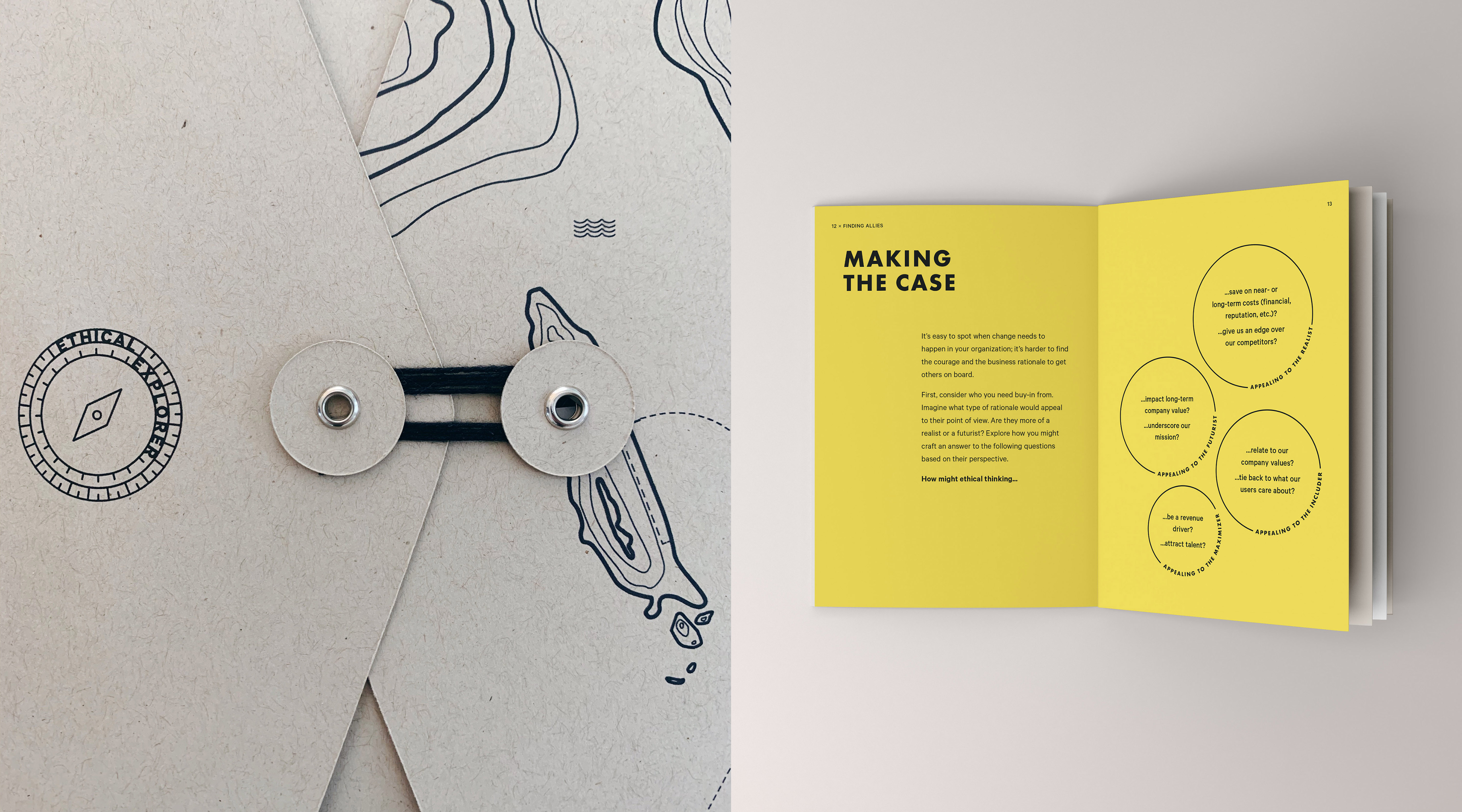
We know tech products have real consequences in the world. Designers and builders like you are increasingly at the forefront of a shift toward more responsible technology. Yet generating awareness and conversation around tech ethics in an organization can feel like an uphill battle, full-time job, and unchartered territory all rolled into one. That’s why Omidyar Network and Artefact partnered to create the Ethical Explorer Pack, a toolkit to help individuals and teams build technology that’s safer, healthier, fairer, and more inclusive for all.

In this webinar, Sarah Drinkwater, Director of Beneficial Technology at Omidyar Network, and Hannah Hoffman, Design Director at Artefact, share the thinking behind the Ethical Explorer Pack and how you can use the toolkit in a variety of situations during the product development life cycle. Download the free toolkit and learn how to advocate for more responsible tech in your organization, no matter your role.

Check out the resources shared by attendees below, and be sure to sign up for our Impact by Design event series to keep the conversation going.

Artefact stands in solidarity with the Black community as an ally in the fight against inequality and injustice. The fundamental mission of Artefact is to create a more equitable and sustainable world. Combating individual and systemic racism is everyone’s responsibility, and we take this mission seriously.

We have spent the past weeks listening, learning, and continuing to examine how we can do better as an organization and community. Inclusion is a foundational value of Artefact, but we must and will do more. We are strengthening anti-racism practices within our organization, as well as continuing to advocate for equity, inclusion, and justice in our craft through responsible design.

I want to reiterate that we are listening. Please share with us any feedback on how we can engage with our community and industry to be more equitable and inclusive.

Thank you,

Rob Girling, CEO


We encourage you to join us in learning from the voices of designers, creatives, and strategists who have been committed to growing and sustaining this movement:

Justice by Design

Antionette Carroll, Founder and Executive Director of Creative Reaction Lab, explores in this talk how creatives have the ability and responsibility to use design in crafting a more just world.

Originality and Invention

In this panel, photographer Carrie Mae Weems, architect Sir David Adjaye, and Professor Sarah Lewis discuss how the creation of space and institutions can challenge societal understanding of justice and identity.

The Value and Importance of Conflict

Visual designer Rick Griffith examines in this talk how constructive conflict of ideas can contribute to meaningful change in communities and society.

How to Think Differently about Doing Good as a Creative Person

A guide to social impact problem solving rooted in equity, consent, and co-creation, by engineer Omayeli Arenyeka.

Revision Path

A podcast by creative strategist Maurice Cherry showcasing the experiences and inspirations of Black creatives across the design continuum.

Redesigners in Action Webinar Series

An introduction to Equity-Centered Community Design, a process and framework by the Creative Reaction Lab that aims to deliver more equitable and just outcomes through design.

Where are the Black Designers?

A virtual conference on June 27 to connect and elevate creatives of color and spark conversation around representation in the design community. The event is open to all professionals.

“You can design and create and build the most wonderful place in the world. But it takes people to make the dream a reality.” – Walt Disney

After almost 14 years at Artefact, I will be stepping down as co-CEO on June 11, 2020. Rob Girling will serve as sole CEO, and I will remain a partner in the company and an advisor to leadership. As always, we remain fully committed to our customers, continually striving to make a positive impact in the world through our work together.

It has been an honor and a privilege to work with the Artefact team over the years. You have helped build something truly special and made my dream of a purpose-driven design studio a reality – thank you. And to the companies who chose – and continue to choose – to work with us, I am sincerely grateful for your trust and allowing us to work alongside you to bring your ideas to life. 

I want to thank Rob for being such an inspiring business partner and friend – I could not imagine a better collaborator. Rob and the Artefact team will continue to deliver the world-class design that has made Artefact one of the best in our field, and I am excited to see him lead Artefact to new heights.

Lastly, I’d like to thank my wife Jenny for being so supportive when I first decided to ditch the corporate life and start my own business. This move has been in the works for some years, and as for what comes next, I do plan to relax for a while, explore some new interests, and spend time with my family and reconnecting with friends.

Thank you, Artefact for a remarkable journey!

Sincerely,

Gavin Kelly