The pandemic has upended education as we know it. School districts and universities across the country were overwhelmingly unprepared for the overnight shift to long-term distance learning and its resulting consequences around equity, relationships, and alignment. 

While schools and teachers have shown great courage and ingenuity in rapidly adopting technology that was not designed to address these challenges, this very technology can contribute to exacerbating inequity, weakened student-teacher relationships, and fragmented systems. There is ample opportunity for EdTech to better support teachers, students, and families in the current remote learning context and beyond. 

As the education sector looks to evolve the use of technology in the face of the ongoing pandemic and gradual return to in-person schooling, it can learn from another industry at the very heart of the pandemic: healthcare. 

Not only are education and healthcare two industries experiencing rapid, technology-driven change as a result of the pandemic, but they also share essential characteristics: a focus on human outcomes (students and patients), a foundation of relationships (between students and teachers, and patients and healthcare providers), and a complex system of stakeholders (from administrators to service providers to government regulators).

Through our experience working with organizations in both the education and healthcare industries, we’ve surfaced three areas where EdTech companies might take inspiration from healthcare’s use of technology to help accelerate positive outcomes in student equity, student-teacher relationships, and systemic alignment.


Understand students more holistically

Distance learning has surfaced the staggering disparities in each student’s home environment, from quiet spaces to study and parent/guardian support to access to technology and connectivity. While this has highlighted the unique circumstances of each learner in new ways, there are many factors beyond environment alone that determine how students learn. These include VARK learning styles (visual, auditory, reading/writing, and kinesthetic), executive function (how learners cognitively process tasks), social/emotional learning (how students collaborate and relate to each other), and individual histories and experiences. Understanding the unique context of each student can help teachers and administrators recognize roadblocks or opportunities to help learners achieve their best.

Education has typically leveraged technology to streamline specific tasks – whether it’s to deliver or disseminate information, or to conduct formative or summative assessments. Yet there is great opportunity for EdTech companies to help teachers and administrators gain a more holistic understanding of students as human beings, and what support they need to succeed. 

Learning from healthcare

The medical community recognizes that chronic health conditions are often impacted by non-clinical factors known as social determinants of health. This includes everything from zip code and financial stability, to education level and social support, to past experiences in the healthcare system. The healthcare industry is working to identify and utilize this information on patient context in order to provide better care. In Artefact’s work in diabetes care, there is emerging interest from healthcare providers to integrate Patient-Reported Outcomes surveys into diabetes care tools. These surveys help healthcare providers gain more nuanced insights about a patient and more effectively target interventions – which are more often related to connecting patients to the right resources and services rather than increasing an insulin dosage, for example.

Education might similarly use technology to improve understanding of student performance and engagement. A more holistic picture of students that moves beyond the standard scope of assessments could help educators and administrators connect the dots between student performance and behavioral, environmental, or other psychosocial factors. While this can help schools meet immediate student needs like access to technology, the long-term implication is the potential toward a more proactive and expansive approach to supporting students and their learning.

Create space to build relationships

We’ve all experienced disruptions to our relationships as a result of physical distancing due to the pandemic, and telecommunication has introduced unique challenges in maintaining authentic connections. This is even more relevant in the context of education, where quality of interaction between teachers and students (as well as among students) lead to better engagement in the classroom, and subsequently better learning outcomes.

As teachers experience myriad challenges to translate in-person classroom activities over teleconferencing or e-mail, we are recognizing that the role of technology is to augment, not replace, critical interactions and relationships in education. Beyond simply translating in-person interactions to virtual ones, technology can help create additional touch points to support learners of different types, for example, by leveraging both synchronous and asynchronous modes of communication, interaction, and instruction. Employing a combination of these approaches can help educators amplify the relational aspects of teaching to achieve better student outcomes.

Learning from healthcare

Adoption of telehealth services has seen steady growth in the last few years and especially during the pandemic. Beyond improved access to care, telehealth can improve patient outcomes in areas like chronic condition management and mental health. Instead of having to schedule an appointment weeks ahead only to get a limited window of time, telehealth introduces new flexibility that allows patients to reach their providers through different modalities based on their situation and preference. Synchronous solutions like audio/video sessions can support real-time care and consultations much like in-person appointments but without the need to factor in time for intake and administrative work, while asynchronous solutions using AI chat bots for triage and instant messaging for patient-provider communication can facilitate non-emergent and ongoing care outside of the limitations of what could be accomplished during a traditional appointment. Telehealth subsequently gives patients more agency to manage their own health by broadening their choices and affords providers the ability to attend to patient needs without having to be in the same space at the same time.

As educators continue to innovate strategies to engage learners in front of a screen or through increasingly flipped and blended learning environments, teachers can use synchronous and asynchronous technologies in concert to reach and empower different kinds of learners more effectively. Moreover, leveraging technology to take some of the rote tasks of teaching off an educator’s plate so that they can focus on higher-order relational outcomes, creates new opportunities for educators and learners to connect and interact both within and outside of the “classroom” – the boundaries of which are surely changing as a result of the pandemic.  


Bridge systems by reducing fragmentation

The piecemeal adoption of technology over time has created a fragmentation problem in education. This has further accelerated during the pandemic, as remote learning forces classrooms, schools, and the education system at large to digitize at an unprecedented pace. Products designed to address specific needs for different stakeholders – learners, educators, administrators, or parents – introduce silos of information that lead to inefficiencies and redundancies. 

It’s not uncommon to see teachers relying on one tool to access curriculum and class materials, another to distribute said materials, and yet another to capture assessment and student information. In this process, teachers themselves become the bridge across the system: manually organizing, transferring, and entering information to ensure that information is propagated across platforms. There is opportunity to create alignment and reduce teacher burdens with “agnostic technology.” This means creating a unified standard or architecture to ensure digital products are interoperable – in other words, able to “speak” with each other. 

Learning from healthcare

The healthcare industry has adopted Fast Healthcare Interoperability Resources (FHIR) – an electronic health records data standard – that has unlocked innovation across the industry. For example, the SMART apps platform built on FHIR allows medical apps to run across different healthcare IT systems and communicate with one another more seamlessly. The consumer-facing Apple Health app is also built on FHIR standards, and can synchronize with various health IT systems, giving patients more access to electronic health records and more agency in managing their own health. Interoperability improves efficiency by allowing data to be shared more easily across supporting systems and between different stakeholders. Reducing fragmentation also provides a more comprehensive view of the system and insights at different altitudes, enabling the industry to tackle more complex challenges.

In EdTech, an interoperable system might enable more coordination among educators, parents, and administrators in the same way digital health solutions help clinicians, home care aides, and visiting nurses provide more coordinated care. Interoperability standards could ease the burden on teachers and administrators, help them surface better insights across data sets, and more effectively allocate resources.

Inspiration and innovation

While the accelerated adoption of technology in education has surfaced many challenges, it also presents opportunities for EdTech to help education evolve during and after the pandemic. By looking to the use of technology in industries like healthcare, EdTech can help propel and improve student equity, student-teacher engagement, and systemic alignment in education – all central to helping every student achieve their best.

As part of SxSW EDU Online 2021, we sat down with Elyse Eidman-Aadahl, Executive Director of the National Writing Project (NWP), and Lukas Wenrick, Assistant Director of the Learning Enterprise at Arizona State University, to discuss inclusion in EdTech.

Discover the “ABC”s of EdTech inclusivity – Align, Build, and Contextualize – as we share an approach to developing inclusive, flexible, and human learning pathways and programs at any organization.

We explore strategies and lessons learned creating curriculum, programs, and delivery models for greater access, equity, and inclusion, and identify ways your organization can develop tech-enabled learning experiences that serve every student’s unique needs.

Artefact’s John Rousseau joined The Briefing.Today futures podcast to discuss responsible design, strategic foresight, and the evolution of the design practice. The interview has been edited for clarity.


Mattia Vettorello (The Briefing.Today): Designers create the many products, services, and applications that we interact with in our daily lives. Each new addition to the system means that known and unknown consequences will follow.

Today, I’m joined by John Rousseau to explore responsible design and systems in flux. John is a partner at Artefact and leads teams in strategic foresight and speculative design. Thank you, John for being here with me today, and welcome to the show.

John Rousseau: Thanks so much, happy to be here.

MV: We currently live in a situation where individual responsibility is key to the health of society at large. How do you define responsible design?

JR: Artefact thinks about responsible design in terms of a set of fairly big ideas that pertain to how innovation should happen. There’s responsibility, say, at a societal level in terms of just doing the right thing, broadly put. In terms of design specifically, it begins with being inclusive of multiple stakeholders. Traditionally, design was primarily concerned with the user, and I would say that it’s still largely concerned with the user. But when you focus just on the user, you miss a lot of other stakeholders in the system. You miss people who are impacted by the things that you make, you miss the broader societal impact, and you miss the planetary impact.

The first aspect of responsibility is really just being stakeholder centric. Beyond that, it’s thinking about all of the ways in which stakeholders are impacted over time. So thinking about things in terms of complex systems and root causes, how we might use design to shape preferable futures, and of course being cognizant of the impact we make, both now and in that long-term future.

MV: What I’m hearing is that we need to build in an extra layer when we design, looking not just to design for a few months or years from now, but introduce a future layer. That’s where the responsibility comes in. Understanding what the consequences could be.

In practicing responsible design, is the designer responsible for what she or he designs? Or is responsible design designing something that lets users be responsible for their own actions?

JR: Traditionally, designers haven’t had a lot of responsibility – or taken it – because they mostly work on behalf of others who commissioned them to do something. The designer is merely a cog between an organization or corporation that wants to accomplish something and an end user of that thing.

What needs to shift is both designers feeling like they actually do have some responsibility for the outcomes they’re creating, but also recognizing that that responsibility exists in an ecosystem of others. It exists in partnership with those that are commissioning, responsible for funding, or benefiting from the work, as well as those on the other end who are consuming and using it.

If we took something like social media as a product, we could say “Nobody is forcing anyone to use social media, so it’s a user problem.” We could also say, “A lot of aspects of social media are designed to be addictive on purpose, so that’s a designer problem.” Or we could say, “The business model of social media is corrupt because it’s based on monetizing attention and that’s a business model problem.” All of these things are different layers of the same problem, which is to say that the design itself can’t be responsible unless all of those components in the system are thought about in a responsible way.

MV: I really like when you say all these aspects should be seen and designed through a responsible lens. Human-centered design is itself limited by the human. It gives centricity to the human, when we need to look at things from a complex, systemic perspective. What’s your opinion on moving the focus from just human-centricity, which is quite static, to enlarge it to a systems perspective? We can call it system-centric design or ecological, bio-centric design.

JR: I really like that framing, but I think that we’re probably a long way away from it. In large part because of the fact that designers still exist in this intermediary space between corporation/entity and user.

In the future, moving toward a more ecosystem view of how design functions will be required. That will by necessity mean that we have to reinvent the processes of design, the concerns of design, and the business models of design. A lot has to change in order to work that way and think that way. We would need to think of design as a continuous activity that is continuously adapted to an external environment. That means that we have to get better at looking forward in terms of how we anticipate the external environment changing; it means that we need to get better at anticipating unintended consequences, recognizing them when they exist, and then adapting or pivoting; and it means that we need to get better at adopting a more adaptive set of behaviors, in general.

If there’s reason to be optimistic about that, it’s in part due to the fact that design has become an internal competency within many organizations. In the old model, where design was simply external, the corporation hired someone to design a thing and the nature of the relationship created a condition where the design was done and simply handed off and shipped. That mindset still exists even though design is integral to many businesses and governments today. What can change and needs to change is this sense of “done-ness.” Design needs to be engaged consistently in a pattern of prototyping, measuring, evaluating, redoing, envisioning, etc. It needs to be a more holistic and iterative process than it is today.

MV: What you’re saying is that design should be really integrated at the C-level. Strategy should go hand in hand with design. In that way, design can be adaptable or at the least the product or solution can adapt to change.

JR: There’s been a trend in design toward these kind of C-level roles like Chief Design Officer, and that’s a positive trend except to the extent that those roles reinforce existing power structures in hierarchies. If design remains the execution part of the enterprise, design will continue to have the same sets of problems that we’ve been talking about. The conception of design, in addition to the representation of it, needs to change. Those two things probably happen in concert – one can’t happen without the other. Design needs to become a more shared activity across enterprises and organizations in order to evolve into a more agile, ecosystem-centric, forward-looking set of activities.

MV: How can we democratize design across and organization and across people, rather than just using it to execute something? It’s more of a way of thinking, observing, coming up with ideas, and connecting them. System-centric or ecology-centric design means complexity and that’s not easy to talk or think about.

JR: I have a hunch that even when we use terms like “design” we’re not talking about the same thing. A big, broad term like that means a lot of different things to a lot of different people, in the same way that “strategy” means very different things depending on who you’re talking to.

I don’t know if it’s necessarily true to say that design shouldn’t be about execution or craft, because we still need to execute things and make things aesthetically beautiful and functional – all of the traditional concerns of design. Rather than asking, “does design need to be democratized?” perhaps there needs to be a new discipline that exists in parallel. A discipline that’s still design but perhaps more hybrid. It needs to borrow from economics and strategy, it needs to have a lens on the business model as well as the customer. It needs to have a lens on the future. It’s a different set of competencies than aren’t readily represented at most organizations today. Design itself needs to broaden its set of concern and perhaps some new adjacent discipline should emerge.

MV: What should we call that discipline?

JR: There are people working on that right now. There’s a program at Carnegie Mellon University right now called Transition Design which is about large-scale systemic change. There is the responsible design work that we are doing at Artefact, and lots of different people have adopted that vernacular.

MV: At Artefact, designers are taking a broader, systemic look at challenges and implementing solutions to drive change and innovation. As you said, design speaks to people in different ways and strategy speaks to people in different ways. How do you encourage companies to take up responsible design and develop solutions to challenges within their industry?

JR: The most important thing is to recognize is that it’s accessible. If I heard what I just said about needing a new hybrid discipline that exists on a completely different mental model, it sounds very intimidating.

Responsible design exists on a continuum, so even if you’re a designer who is primarily working in execution – say designing products for market – there are all kinds of ways you can bring a responsible perspective to what it is you do. It may be just by shifting your mindset a bit and thinking beyond the user. Who are the other stakeholders in the system? Have I thought about them? Have I thought about the impact of the product I’m creating? Do I have any agency over those impacts in terms of what I’m doing?

This movement toward responsibility will have to happen both in a top-down and bottom-up way. In the top-down way, it’s senior people recognizing the need to make things more responsibly and changing entire processes and organizations in line with those goals. For individual designers who may not have that same degree of agency, there’s still a lot that one can do. I think the trick is to find the small ways to move toward responsibility and actually seek it out, as opposed to waiting for permission to bring it into your work. I see this happening already in many different places.

MV: It’s always better to ask for forgiveness than for permission.

JR: That’s a rule to live by in design.

MV: Artefact also practices strategic foresight. The COVID-19 situation has seen uncertainties increase exponentially for everyone, from individual to organization. What is the connection between design and strategic foresight and how do you implement that in your design practice?

JR: Humans have always thought about the future and the professionalization of strategic foresight has been around for at least 50 to 70 years. In terms of its integration with design, Artefact began to move toward it largely because we were looking for ways to be more responsible and to think farther ahead. It was clear that there were a number of instances where the tech industry had not done a good job of anticipating future consequences, and the mental model was, “We’ll build it and see what happens, things more or less work out.” It became clear to us that that was a failed way to think about how the world works.

Strategic foresight provides a pretty ready kit of tools that allow us to think creatively about the future, create more useful images of the future, and use those images in concert with the design practice to interrogate what it is that we should make and perhaps what it is we shouldn’t. By integrating foresight practices – whether it’s scenario-building or envisioning – into the design practice, we’re in a position to become better designers because we adopt a broader view of what is possible as well as a broader view of what should happen. In this way, we can better integrate our values into the futures that we are creating in ways that aren’t as readily accessible if we don’t think long-term.

MV: Sometimes it’s hard for a company – or anyone – to envision what the future could look, feel, and sound like. It’s very hard to put ourselves in the shoes of someone in 2030 or 2050. How do you demonstrate the power and benefit of merging design and foresight?

JR: The idea of designing for the future has been around for quite a while. Thinking back over the last decade of design consulting, a frequently recurring project type is “The future of X.” The future of work, the future of mobility, etc.

The traditional design firm would think ahead to what was technologically possible, try to envision future needs, and essentially create speculative representations of future products that were intended to inspire innovation internally: north star products, services, and concept cards for the future. A lot of this, while it was fun and interesting to do, was not always particularly rigorous in terms of developing a sense of the tensions involved in this future. Who are the stakeholders? What’s happening more broadly?

What we’ve been trying to do is add rigor to this process. As our clients have become more sophisticated in recognizing the existence and the value of foresight, we have been starting to get requests to do these “Future of X” projects in slightly different ways: to either take a broader lens, or explicitly create scenarios, or otherwise integrate aspects of longer-term futures thinking in a more rigorous way, with the innovation charter that we’re also often tasked with. That’s what’s different about doing this at a design firm as opposed to a foresight consultancy, because our job doesn’t really end with, say, the image of the future. Our job ends when we have a strategy and set of ideas that are meant to live within that future.

The secret superpower of design is the ability to make something tangible and to realize it in a way that isn’t just description. If I were to point to one weakness in the traditional foresight process, it might be that it relies on narrative and words, which are great, but not always sufficient. A lot of the speculative design practice is critical and not necessarily directed toward creating a better future. We are trying to take the best of all of those worlds and put them together in a way that creates new kinds of value. How do we think more creatively about the future in a structured, rigorous way? How do we blend that with innovation programs in such a way that we can think more creatively and orthogonally about what is possible and what we might make? And how do we turn that into something tangible, that hopefully is more useful to the organization because it’s grounded in a broader set of ideas than what we perhaps would have done in the past?

MV: That’s fascinating. I like your proposition of merging the two disciplines, where we don’t just speak to the narrative, but we act on those words and give a physical form to it, rather than leaving companies with utopian and dystopian futures but nowhere to take those futures.

JR: Exactly. The way we think of barriers or boundaries between disciplines today – the reason we have a separate discipline called foresight and a separate discipline called design and a bunch of sub-disciplines within that – is largely the result of the industrial revolution and the effect on the economy of dividing up knowledge and human labor into discrete categories. It’s worth noting that it hasn’t always been that way.

Many of the biggest breakthroughs in human history have come about as a result of hybridity – people who are combining different streams of knowledge together in novel ways. We shouldn’t be afraid of that. As designers, for example, we shouldn’t be afraid of being amateur futurists, and futurists shouldn’t be afraid of being an amateur designer. It’s really about looking more broadly at what is possible and choosing the methods and assembling the right collaborators that will achieve a novel result. There’s no reason to continue doing things the way we’ve always done them simply because that’s the way we’ve always done them.

MV: Exactly. We need responsible design in order to adapt to changing circumstances and systems in constant flux, but we need to adapt in an active way. By building stronger, multidisciplinary teams, we can design more resilient, responsible, sustainable solutions. Thank you so much, John.

The UX 2030 Series

As emerging technology becomes an increasingly ubiquitous part of our lives, the design decisions we make today will shape how these technologies impact the world over the decade to come.

This series envisions how we might apply emerging technology in specific industries to create positive impact. We’ll explore what might accelerate or hinder these realities and the key risk areas and unintended consequences to consider.

Illustration by Laura Carr + Paige Ormiston


With society seemingly more divided than ever, coming to a shared sense of reality, empathy, and purpose is a public imperative. While we often think of virtual reality (VR) in an entertainment or enterprise context, the emotional power and behavioral impact of the unprecedented realism VR environments of the future offer can create enormous opportunities for public education and consensus-building.

We imagine a 2030 where responsibly designed VR experiences are a unifying medium that help people understand complex circumstances and grasp the impact of invisible challenges through tangible, hyper-personalized experiences bolstered by technology like 3D environmental mapping, AI, and machine learning. So how do we get there – and what risks will we face along the way?

Tackling the tragedy of the commons

People have trouble comprehending slow, distributed change. If a process doesn’t happen at a pace or visibility that we can perceive, we may not believe it is occurring at all. The COVID-19 pandemic has shown us how many people find it hard to grasp the idea of a virus that causes preventable deaths and the impact of individual actions on transmission.

What if we could see someone breathe out virus droplets and the surfaces they land on? What if we could visualize first-hand how the virus spreads in enclosed spaces, and who would become infected or even die? What if that happened over the course of seconds, not weeks? And what if – rather than seeing the impact on anonymous avatars – you were experiencing this environment with your own family, friends, and coworkers? The evolution of VR can make this vision a reality.

VR is the captivating next frontier of data visualization. It has the power to make the intangible visible, and the consequences of action – or inaction – immediate. Just as the humble bar chart helped people compare the scale and relationships of numbers centuries ago, VR has the potential to communicate the effects of our actions not just on ourselves today, but on complex systems over time. Over the next decade, VR as a visualization mechanism will create opportunities for society to become educated on issues that are slow, complex, and require collective shifts in behavior – such as pandemics or climate change.

Visualizing the environment, emotion, and time

VR has the unique ability to manipulate environment, emotion, and time. As VR evolves over the next 10 years, it will be able to virtualize the real world into highly believable and persuasive copies. What good might we build with this technology?

Used responsibly and with intention, VR can bring alignment and consensus to contentious or difficult-to-understand topics. Imagine an educational VR game that teaches the impact of individual behavior on the outcomes of a global pandemic. The experience puts you into everyday situations in your own life and maps the direct impact of your actions on virus transmission. You take public transport, meet with coworkers, enjoy a couple drinks with friends at your favorite crowded bar, and go home to your family. At each of these points, you have the option to make a decision: Do you wear a mask? Do you get on the crowded bus? Do you sit indoors at the bar?

Environment

By 2030, VR will utilize real environments mapped in 3D with a level of accuracy that will make them essentially indistinguishable from the real world. We are already seeing a tremendous amount of progress in environmental mapping techniques and data, and what started as Google Street View is now expanding to map indoor environments as well. Consumer devices increasingly include depth-sensing cameras that can generate 3D representations of not only individual objects but entire buildings.

Moreover, VR is not constrained to the limitations of the real world. A VR environment could transport you from interacting with people on the ground to being literally high in the sky, observing how the other people who you interacted with go about their days. Perhaps your actions influence how others act after observing you. You can follow their decisions – good and bad – to see the role we all play in exhibiting responsible behaviors for the good of the community.

Emotion

VR also offers feedback at an emotional level – one of its most powerful characteristics. When integrated with other emerging technologies, VR environments can impact our emotions and behavior both in the virtual and real world. Recent advancements in generative adversarial network algorithms for machine learning have created convincing reproductions of images, speech, and gestures of real living humans, called deepfakes. What if we applied that technology to generating personalized characters in a VR environment? By reproducing the people you care about in VR, the emotional connection you have to the experience will be much deeper.

Time

Another key feature of VR is the ability to compress time, amplifying subtle changes into concrete impact. What if you could immediately see the results of your decisions, for example in an infection rate score that demonstrates which of your actions have the direst consequences and which have minuscule impact at scale?

Because VR has the ability to compress time into a fast-paced experience, you could re-live your day again and again, varying the choices you make. In this Groundhog Day-like experience, the immediate feedback and ability to iterate on behavior can help you better recognize and learn the impact of your actions.

Addressing risk areas

Even if VR experiences are deliberately called out as “virtual” or “not real,” there is still a significant amount of “reality” that VR designers create with regard to how users experience and perceive these environments. The potential to significantly distort the truth raises several important ethical questions.

Misinformation

It is obvious that the ability to influence better behavior through manipulation of environment, emotion, and time may be used to influence people to commit bad behavior or actions that are not in their interest. We must assume that the existence of powerful technology means that it not only can, but will, be used for malicious purposes. The false information that is easily spread across social media today shows us that we can’t assume audiences will recognize truth from fiction in digital contexts. When VR is nearly indistinguishable from the real world, then those to whom “seeing is believing” are easily radicalized.

As designers and technologists, we need to hold ourselves accountable to responsible use of technology like VR. Creators of platforms that distribute and enable VR content must also establish content standards and ratings that flag inappropriate experiences or those that distort reality in ways that would have negative consequences. Twitter’s decision to flag misinformation surrounding the 2020 election is one example of an attempt to balance preventing the spread of dangerous misinformation while enabling ambitious goals of free speech.

Critically, as a society, we must teach and practice media and digital literacy, and foster the critical thinking skills to question the motivation of technology products.

The ethics of emotional manipulation

Simulating real humans through machine learning algorithms (like deepfakes) is already highly controversial today. Amplifying this in a VR context to influence people on an emotional level must face even more ethical scrutiny. Is it ethical to exploit people’s emotional attachments in order to influence their behavior? It seems that anti-smoking, anti-drunk driving, and even social impact campaigns already believe it is.

Yet it is challenging to argue that the preferable outcomes would in all cases justify the means. It may also be falsely based on the assumption of having a full understanding of what the truth is at all times, which we know isn’t always the case. If we manipulate people to behave in a way that we understand is preferable, what if that understanding of what’s preferable changes? Emotional influencing is not something that can be easily reversed once it has happened, so we have to proceed with caution, to say the least.

Data privacy

Data privacy is another critical issue that a VR environment based on the real world exacerbates. Is it ethical to use personal data about humans and environments to influence behavior? Where is the data gathered from? How would someone consent to having themselves or their home recreated by an algorithm in VR? What about shared or public spaces like your favorite bar or park?

Governments have begun introducing regulation in an attempt to address data protection concerns. For example, California passed a law in 2019 that prohibits distributing manipulated videos of political candidates within 60 days of an election. The question remains, however, of how enforceable such laws might be in practice, particularly as emerging technologies scale.

VR as a unifying medium

Historian Melvin Kranzberg’s First Law of Technology famously states, “Technology is neither good nor bad; nor is it neutral.” To realize the educational and unifying power of VR, we must recognize that it is our collective responsibility as designers, technologists, regulators, and consumers, to create and leverage VR experiences that align with our individual, societal, and collective good. We believe we can aim higher together and responsibly harness emerging technology to tackle the most pressing issues of our time and create a preferable future.

It is hard to imagine that it has been over a year since Business Roundtable released a revised Statement on the Purpose of a Corporation. For many, the question was whether these statements and others in the same spirit truly represented the beginnings of a fundamental shift toward stakeholder capitalism, or whether it was all an exercise in PR. Then came the pandemic, widespread social unrest, and a declining economy, all wrapped in the unrelenting uncertainty of 2020. By Fall, the initial report card was mixed: early research found that signatories had not made significant progress toward these goals compared to peers engaged in business as usual.

One explanation is that transformational change frequently encounters obstacles in terms of organizational readiness, priorities, scope, and timing. It simply takes time. Consequently, even as leaders and the zeitgeist have embraced the vision of stakeholder capitalism, many organizations may lag behind in terms of their capacity to act on otherwise good intentions.

As we look ahead to 2021 and beyond, we believe that firms will need to demonstrate more concrete actions toward stakeholder centricity and a commitment to preferable futures – both in response to increasing external pressures and as a means of making organizations more resilient in the face of continued uncertainty.

So, how might we do that?

Designing a more responsible future

Human-centered design (HCD) is a starting point. Traditionally, this has meant engaging stakeholders and users, identifying challenges, unmet needs and opportunities, co-designing and prototyping solutions, and iterating throughout execution and delivery. As a first step toward stakeholder centricity, integrating more human-centered processes is a proven approach to creating more meaningful and relevant products, services, and interventions. But it’s not enough.

On its own, the strength of HCD is also a limitation. A disproportionate focus on users can create critical blind spots and limits our ability to consider impacts to other stakeholders. This can lead to the sort of significant negative externalities that we experience from products and services every day – for example the effects of social media on political polarization, the gig economy as a contributor to income inequality, delivery services and the environment, and so on. In each case, exceptionally good solutions lead to negative effects. Indeed, almost everything we make creates a long cascade of systemic impacts that shape the world around us, both immediately and over time.

Moving toward a more fair and inclusive form of capitalism will require that design and innovation leaders adopt a more holistic approach to shaping the future. In our own work, we have built on the strong foundation of HCD and expanded the definition of stakeholders to include users as well as others impacted by a product or policy, the commons, society as a whole, and even the planet. We also advocate a long-term perspective that brings futures literacy into the innovation process. This approach to stakeholders and futures requires the development of new mindsets and methods adapted from multiple disciplines – systems thinking, business design, foresight, and ethics, among others. We are calling this integrated approach to stakeholder centricity “responsible design.”

Responsible design means the products and services we create should account for impacts to all stakeholders – today and in the future.

The current state of responsible design

Responsible design is an emerging discipline, though we see evidence of the trend in movements related to ethical technology, the circular economy, healthcare, design for social change, and elsewhere. Even so, we wanted to better gauge whether these ideas were becoming mainstream in large organizations, and whether firms were investing time and resources in responsible design as a path toward corporate purpose and/or stakeholder capitalism. To answer this question – and to better understand potential barriers to change – we surveyed a group of 50 senior leaders in design and innovation, drawn from multiple industries including technology, healthcare, pharma, retail, and mobility.

Long-term thinking and outcomes-focused design

We asked participants to rank a series of responsible design attributes in terms of whether their organization would value it highly or not at all. These included “taking a long-term perspective,” “being cognizant of the wider impact of solutions,” “working toward preferable futures,” “understanding complex systems and root causes,” and “being inclusive of all stakeholders.” Using the same attributes, we then asked whether firms were devoting more or fewer resources to each compared to five years ago. Notable findings include the growing importance of thinking and planning in long timescales, and the importance of being more cognizant of impacts – both of which run counter to the “move fast and break things” ethos of the previous decade.

Stakeholders in theory vs. practice

Participants also ranked “inclusive of all stakeholders” as the least-valued and lowest-trending attribute, suggesting that stakeholder-centric thinking remains emergent compared to the more established mental models and practices of human-centered design. While there seems to be recognition that stakeholder capitalism itself represents a worthy ideal (60% of participants say that it is increasing in importance, when asked directly), our survey also revealed the lack of a common definition and a variety of interpretations of what it might look like in practice.

Barriers to organizational change

Other qualitative responses revealed a range of tensions between the attributes of responsible design and perceptions that such an approach would be slow, inefficient, or costly. Many organizations – particularly in technology – are aligned to values that may limit the near-term prioritization and adoption of responsible design (e.g., customer obsession, short-term results, data-driven decision making, etc.). This condition is exacerbated by differing priorities, incentives, and motives across departments and up and down the organization.

Looking ahead

Our research suggests that positive change is occurring and the trend toward responsible design and stakeholder capitalism will likely continue, particularly in light of the shifting global role of organizations and leadership amidst the larger backdrop of social, political, and economic uncertainty. As the pandemic has stressed so many global systems, we see an opportunity for new thinking and a more fundamental reset of business as usual. Now is the time.

We are also optimistic that the business case is clear, even as the transition to stakeholder capitalism is unevenly distributed and variously interpreted. Responsible design will enable firms to command greater influence over desired outcomes and actual impacts while better anticipating and managing risk. This will allow organizations to more effectively align corporate purpose, values, and actions, creating more durable brand value and attracting critical resources.

Lastly, we believe stakeholder centricity will change how we do innovation. It will be critical to better define the meaning of key mental models and concepts as a precursor to more ambitious organizational change. And we will need to create new tools and frameworks that help us do our work. This may take some time, and we should be patient in measuring progress toward these desirable goals, while continuing to advocate for change at all levels of the system.

A special thanks to Executive Creative Director Neeti Sanyal and Strategy Director Jeff Turkelson for their research support.

When a feature launch or key deliverable is on the line, the last thing a product team wants to do is slow down – even when there might be a problem. In the face of breakneck deadlines and competing stakeholder priorities, how can you assess the impact of your work and advocate for a more intentional, ethical approach to technology development?

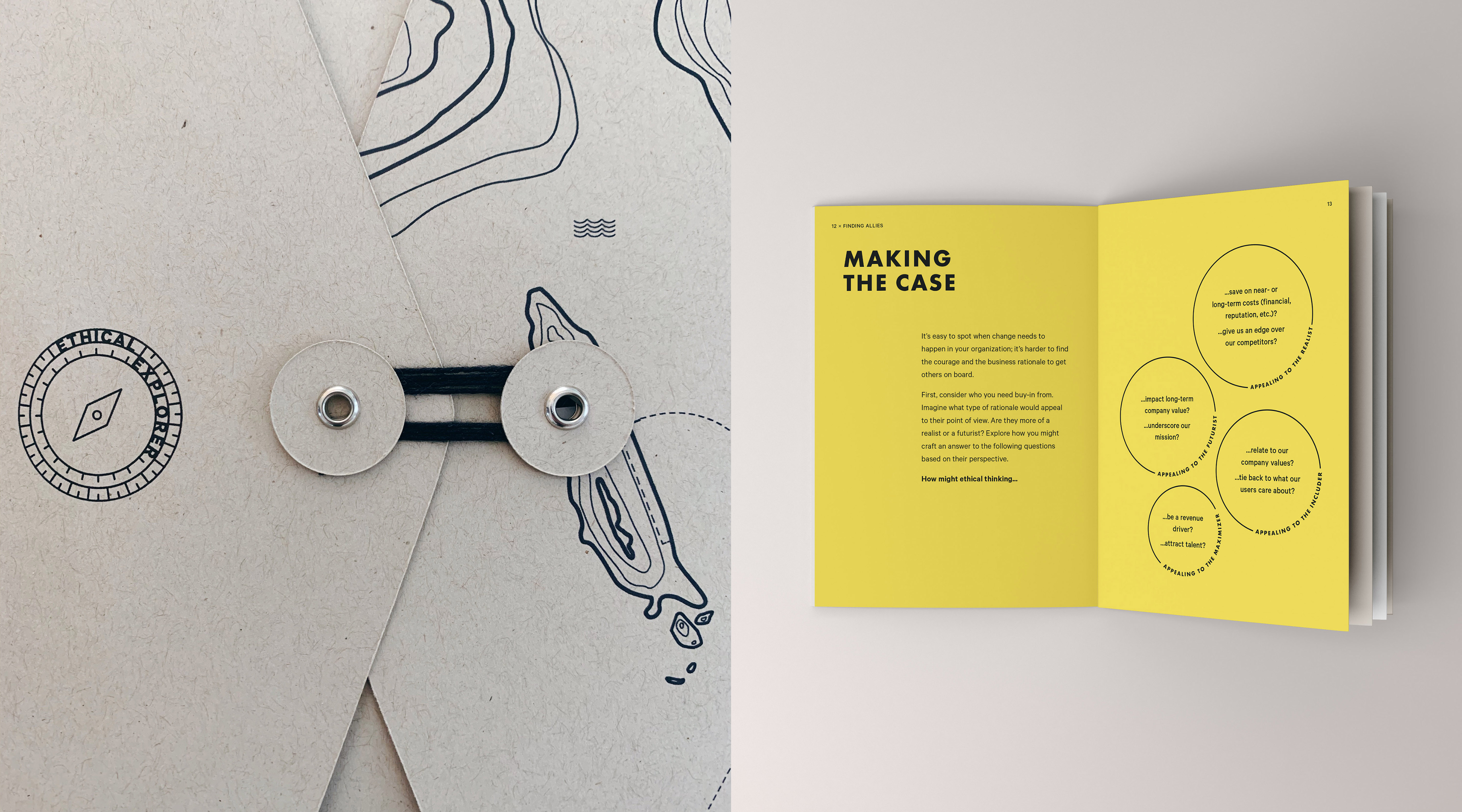
We know tech products have real consequences in the world. Designers and builders like you are increasingly at the forefront of a shift toward more responsible technology. Yet generating awareness and conversation around tech ethics in an organization can feel like an uphill battle, full-time job, and unchartered territory all rolled into one. That’s why Omidyar Network and Artefact partnered to create the Ethical Explorer Pack, a toolkit to help individuals and teams build technology that’s safer, healthier, fairer, and more inclusive for all.

In this webinar, Sarah Drinkwater, Director of Beneficial Technology at Omidyar Network, and Hannah Hoffman, Design Director at Artefact, share the thinking behind the Ethical Explorer Pack and how you can use the toolkit in a variety of situations during the product development life cycle. Download the free toolkit and learn how to advocate for more responsible tech in your organization, no matter your role.

Check out the resources shared by attendees below, and be sure to sign up for our Impact by Design event series to keep the conversation going.

While the future is always unknown, the pandemic has amplified our awareness of uncertainty, implicating many facets of life that were once thought of as enduring. 

This series explores this altered landscape through the lens of critical uncertainties and narrative sketches of potential 10-year futures. These scenarios are not predictions – they illustrate a range of plausible outcomes that may help challenge prevailing assumptions, spark discussion, and inform more resilient strategies.


The strategic question

In light of the current pandemic, how might the future of mobility evolve in the US by 2030? Will the pandemic act as a catalyst for significant change, or will we observe a return to the norm?

The model

Mobility scenarios often focus on technology (e.g. autonomous, AI, electrification, etc.) and innovation/policy (e.g. new business models, regulation, etc.). Looking ahead, the mobility landscape may also be impacted by other factors we have previously taken for granted:

1. Norms regarding shared space and resources

How might policies and attitudes toward density, crowds, personal/public space, and shared resources/services affect mobility behaviors? 

2. The future of work

How might changes in work – specifically the trend toward decentralized and asynchronous knowledge work and the “death of the office” – contribute to secondary effects that impact mobility?

The interaction of these dynamics leads to the following scenarios:

Four scenarios

1. View from 2019

Work is more centralized + Sharing increases

2030 looks a lot like we thought it might in 2019.  Pandemic effects were relatively short-lived – with most people returning to old patterns of work and lifestyle once the virus was contained. The office remains the dominant paradigm for professional work and the car remains the primary means of transport around which everything else is built. In large and affluent cities, AI manages the commute for many, in concert with connected vehicles, ride-sharing services, increasing numbers of autonomous vehicles, and a smattering of micro-mobility solutions that come and go. More and more organizations are organizing their own solutions, and the company bus is simply an extension of the office. Poor neighborhoods, smaller cities, and rural areas are increasingly left behind, as access to stable and well-paid work declines, income inequality widens, and the middle-class contracts.

2. Urban Utopia

Work is more decentralized + Sharing increases

Work is a hybrid activity – taking place in new, shared offices, at home, and elsewhere, but still somewhat linked to geography. Large cities are still the nexus of culture and commerce. City planners moved aggressively during and after the pandemic to create more livable cites – closing off major roads to vehicle traffic and moving toward pedestrian and bike-friendly infrastructure. E-bikes and scooters are everywhere. Retail is thriving as a destination experience, while traditional office space is being converted into mixed-use spaces and apartments which are available as part of innovative and affordable sharing models that have increased access to housing. Delivery has become the dominant means of acquiring everyday goods. The automobile is increasingly irrelevant in the city but remains a necessity in the suburbs and beyond. 

3. Solo Commute

Work is more centralized + Sharing decreases

As some experts predicted, the virus is still with us, although we have become adept at managing its impact. The initial experiment in remote work proved a mixed bag, leading many firms to create new workspaces designed to foster optimal levels of collaboration and productivity while maintaining new and sometimes elaborate hygiene policies. Cities are particularly dysfunctional, as mass transit ridership has declined, reducing revenue and thwarting needed improvements. Safer alternatives and micro-mobility have proliferated, exacerbating challenges with aging infrastructure and a car-centric world. Traffic is getting worse each year, and the suburbs are growing. Those that can commute by car do so, parking some distance from the office where they access autonomous company transit designed for individual privacy and cleanliness. 

4. Rural Shift

Work is more decentralized + Sharing decreases

The effects of the pandemic have been deep and long-lasting, particularly in terms of attitudes toward public/private space, density, and perceived safety. The office is dead. As more companies adopted remote, decentralized and asynchronous work policies, many people migrated from coastal cities to more affordable and less congested locales – breathing new life into small towns as large cities have struggled. Along with work, everything that can happen online does, including higher education, which has become increasingly vocational. The talent economy has created both opportunity and disruption. The economic effects of the early 2020s have lingered – inspiring new priorities and less conspicuous consumption. Even so, personal vehicles are a symbol of the utility they provide and the lifestyles they enable. Fewer people are flying, and the road trip is back.

Looking Ahead

This framework rests on various assumptions – for example that the percentage of people able to work remotely will continue to grow (currently estimated at ~40%). In a future where roughly half of workers are remote, it goes without saying that the other half will need to get from A to B much like today. Likewise, a wide range of services and experiences will require physical presence regardless of how the pandemic plays out. 

Even so, the impacts are potentially significant. These scenarios aim to explore the edges of what is possible and the dynamics at play. In some ways, 2030 will look like today, and in other ways it will be quite different – the question is in which ways, and to what extent. Will you load groceries in an electric SUV, receive delivery by drone, ride an e-bike to the market, hail an autonomous shuttle, or take public transit? Yes, probably.

Artefact stands in solidarity with the Black community as an ally in the fight against inequality and injustice. The fundamental mission of Artefact is to create a more equitable and sustainable world. Combating individual and systemic racism is everyone’s responsibility, and we take this mission seriously.

We have spent the past weeks listening, learning, and continuing to examine how we can do better as an organization and community. Inclusion is a foundational value of Artefact, but we must and will do more. We are strengthening anti-racism practices within our organization, as well as continuing to advocate for equity, inclusion, and justice in our craft through responsible design.

I want to reiterate that we are listening. Please share with us any feedback on how we can engage with our community and industry to be more equitable and inclusive.

Thank you,

Rob Girling, CEO


We encourage you to join us in learning from the voices of designers, creatives, and strategists who have been committed to growing and sustaining this movement:

Justice by Design

Antionette Carroll, Founder and Executive Director of Creative Reaction Lab, explores in this talk how creatives have the ability and responsibility to use design in crafting a more just world.

Originality and Invention

In this panel, photographer Carrie Mae Weems, architect Sir David Adjaye, and Professor Sarah Lewis discuss how the creation of space and institutions can challenge societal understanding of justice and identity.

The Value and Importance of Conflict

Visual designer Rick Griffith examines in this talk how constructive conflict of ideas can contribute to meaningful change in communities and society.

How to Think Differently about Doing Good as a Creative Person

A guide to social impact problem solving rooted in equity, consent, and co-creation, by engineer Omayeli Arenyeka.

Revision Path

A podcast by creative strategist Maurice Cherry showcasing the experiences and inspirations of Black creatives across the design continuum.

Redesigners in Action Webinar Series

An introduction to Equity-Centered Community Design, a process and framework by the Creative Reaction Lab that aims to deliver more equitable and just outcomes through design.

Where are the Black Designers?

A virtual conference on June 27 to connect and elevate creatives of color and spark conversation around representation in the design community. The event is open to all professionals.

“You can design and create and build the most wonderful place in the world. But it takes people to make the dream a reality.” – Walt Disney

After almost 14 years at Artefact, I will be stepping down as co-CEO on June 11, 2020. Rob Girling will serve as sole CEO, and I will remain a partner in the company and an advisor to leadership. As always, we remain fully committed to our customers, continually striving to make a positive impact in the world through our work together.

It has been an honor and a privilege to work with the Artefact team over the years. You have helped build something truly special and made my dream of a purpose-driven design studio a reality – thank you. And to the companies who chose – and continue to choose – to work with us, I am sincerely grateful for your trust and allowing us to work alongside you to bring your ideas to life. 

I want to thank Rob for being such an inspiring business partner and friend – I could not imagine a better collaborator. Rob and the Artefact team will continue to deliver the world-class design that has made Artefact one of the best in our field, and I am excited to see him lead Artefact to new heights.

Lastly, I’d like to thank my wife Jenny for being so supportive when I first decided to ditch the corporate life and start my own business. This move has been in the works for some years, and as for what comes next, I do plan to relax for a while, explore some new interests, and spend time with my family and reconnecting with friends.

Thank you, Artefact for a remarkable journey!

Sincerely,

Gavin Kelly

This webinar is part of our Impact by Design events series. In the face of the COVID-19 pandemic, we’re all experiencing new ways of communicating, collaborating, and problem-solving. At Artefact, we want to share the experiences and insights that we are learning as we navigate this new terrain with our partners. Join us in exploring how to use design to adapt to uncertainty.


Baobab is a digital social learning platform for African students who are part of the Mastercard Foundation Scholars Program. Designed by Arizona State University and Artefact, it provides learning tools, mentorship, and opportunities to connect and collaborate with other Scholars across the continent.

Baobab has been a key tool to help students who can no longer access their campuses due to the evolving COVID-19 pandemic continue their learning. In this virtual session, Artefact’s Eric Croskey and Bethany Weigele of Arizona State University discuss how the Baobab platform pivoted to deliver learning content in new ways, and the features and modalities digital communities need to help people engage, learn, and collaborate in a remote world.