Remote Reality: How to Adapt Methods and Maintain Momentum for Workshops
Image courtesy of Splash International
This webinar is part of our Impact by Design events series. In the face of the COVID-19 pandemic, we’re all experiencing new ways of communicating, collaborating, and problem-solving. At Artefact, we want to share the experiences and insights that we are learning as we navigate this new terrain with our partners. Join us in exploring how to use design to adapt to uncertainty.
International development organization Splash and Artefact partnered to facilitate a three-day strategy summit for their girls’ menstrual health programs in Ethiopia and India. Convening the world’s leading menstrual health experts, the original intention of the summit was to set a vision, strategy, and defined roadmap for Splash’s menstrual health interventions. Due to the evolving COVID-19 pandemic, Splash and Artefact pivoted the event into a virtual summit with clear, actionable next steps for all 30 participants across several different countries.
In this webinar, Artefact Design Director Hannah Hoffman sat down with Emily Davis, Program Manager for Menstrual Health from Splash, to share three principles that guided us in adapting design thinking methods for success in a remote environment. Learn actionable strategies for adapting your work that will serve you in our current remote reality – and the future to come.
Dear Clients, Design Community, and Artefact Family,
We have been closely
monitoring the Coronavirus 2019 (COVID-19) pandemic and wanted to send out a
note to our community about what we are doing and how we have been updating our
procedures based on recommendations
from the Center for Disease Control (CDC), as well as state and international
agencies.
As always, our first priority is to protect the health of our clients, employees, their families, and those in our community.
Additionally, we want
to continue to pivot our working styles and collaboration methods so that we
can do our part to slow community transmission of the virus while continuing to
deliver the highest quality work.
In order to achieve this, we are following guidance for social distancing and beginning last Thursday, we recommended that all Artefact employees work virtually, from home until at least April 24, 2020. Pending changes in recommendations from the CDC and local public health organizations, this date will likely be extended. As a digital agency, we are fortunate that all our tools and services are cloud based and that we’ve experienced minimal disruption moving entirely to a telecommuting posture. We are encouraged to see our staff exercise considerable creativity in how they are utilizing tools in order to effectively collaborate, design, and run workshops while working remotely with our clients.
We also stopped all domestic and international work travel until further
notice. Our studio is in the epicenter of the US outbreak and we find ourselves
in a position of needing to make responsible choices to reduce the spread of
COVID-19.
If you are a current client, you may have already seen or heard about these changes in how we are conducting business and we want to say thank you in advance for your adoption of these working styles given the volatile state we are all in.
We’ll continue sharing updates on the COVID-19 situation as they
evolve. If you have questions, please reach out to shauna@artefactgroup.com.
Stay safe and healthy,
Rob Girling, Co-CEO
Gavin Kelly, Co-CEO
Design
Dungeons & Dragons: A secret to stronger design thinking
Last year, a few colleagues at Artefact implored me to run a game of Dungeons and Dragons (D&D) for them, as none of them had played before. Though I played for years in college, I had never facilitated a game and was excited to give it a shot. Having rediscovered the hobby now as a professional, I realize that playing D&D has made me a better designer – not only because it allows me to develop related skills and flex creative muscles outside of the constraints of day-to-day professional work, but because it often reminds me of key philosophies and mindsets of design that are otherwise easy to forget.
Associate Strategy Director and dungeon master extraordinaire Jeff Turkelson
Becoming a Better Facilitator
“You disembark at the coastal city of Silverport just as
the sun sets below the horizon. Hundreds of sky lanterns hover just above the
city, illuminating the white stone buildings in a soft, warm glow. You’ve apparently
arrived during some kind of festival; a fellow passenger complains out loud
that it’ll be impossible to find any room at the inn with such festivities
happening. What do you do after stepping off the ship?”
Dungeons and Dragons is a pen and paper roleplaying game
where people play fantasy characters like elvish wizards and dwarven
barbarians, fighting monsters to get loot and become more powerful. It’s
similar to a board game in that it’s typically played around a table using dice
and other paraphernalia, but unlike most board games where rules narrowly define
a few actions you can take during your turn, playing D&D is more like being
an actor in an improvised play where your options are open-ended. In this way,
D&D can be thought of as structured collaborative storytelling.
One person – referred to as the dungeon master (DM) or game master (GM) – facilitates the game by describing an imaginary world, while the rest of the players each take the role of a single character within that world. In the course of the game/story, the DM describes situations that the other players find themselves in, and the rest of the players describe what their characters do in response.
That’s the role I took on for my friends – creating a world and facilitating their adventures within it. It’s a lot of work, but taking on the mantle of DM has helped me become a better communicator and facilitator in a design context. As a DM you have to plan and create materials for each session that provide enough structure to be prepared, but flexible enough to accommodate the many different ways the game can play out. You have to manage different players’ inputs, making sure everyone is heard and invested in the experience. And you have to think on your feet to manage the extreme unpredictability of each session.
Leading a group along a collaborative, sometimes chaotic
journey of creation deeply parallels the skills needed to successfully
facilitate workshops with users, clients, and other stakeholders. Each session
of D&D may as well be another workshop under my belt.
Practicing Empathy
Player 1, the warrior: “We should just kill the bandit
leader and collect the bounty!”
Player 2, the priest: “No, my character believes everyone
deserves a chance at redemption. Let’s find another way.”
One of the first things a player does in D&D is create a
character sheet that describes not only their character’s name, skills, and
abilities, but also their behavioral traits, flaws, and goals. Do they respect
the law or do they play by their own rules? Are they selfless or on a personal
quest? Are they well-connected or a loner?
Playing a character isn’t just doing whatever it takes to
win the game, it’s acting how one’s character would behave in a given
situation, and sometimes that means doing something risky, costly, or
self-defeating. You have to consider their values, their motivations, and their
overall understanding of a situation (or lack thereof).
Designers often talk about building empathy for their users,
which typically amounts to doing some user research to better understand their
needs or soliciting feedback. But empathy is more than an intellectual
understanding of someone else’s preferences. Empathy is a degree of emotional
understanding, feeling the way someone else does and understanding why they
think and act the way they do.
Building empathy for users is a serious subject and of course a game is not sufficient on its own to fostering a consistently empathetic mindset. Yet empathy is one of the most important – and difficult to achieve – skills that a designer can have. Spending weeks, months, or years playing the role of people very different from yourself is good practice for when you are seeking to empathize with, not just understand, your users.
Managing Unintended Consequences
“You have discovered the scroll of cat summoning. When you read its incantation, a normal house cat appears at your feet. If the cat is lost or killed, reading the incantation will summon the same cat back at your feet.”
In the game I ran for my colleagues, I designed a magical “scroll
of cat summoning” as a fun little item for one of my players who loved cats. I
thought that giving them a pet in the game that could never be lost could offer
some nice narrative flourish. But what I didn’t expect was the party’s
immediate response upon discovering the scroll:
“Great! We have an unlimited supply of meat whenever we
travel!”
Had I stopped to think like an adventurer who would face the challenges of foraging and hunting for food on long, harrowing journeys, perhaps I would have realized my mistake.
Today, companies are facing public backlash for the
unintended consequences of their product decisions, and there is a growing
movement amongst designers and technologists to stop and consider the
unintended consequences of the things they create. It can be hard to appreciate
the value of thinking through the possible consequences of your design when it
all feels so theoretical, but I’m frequently reminded of its importance while
playing D&D.
Ready for your quest?
Each session of D&D is a designed experience, borne out
of research and planning, supported by crafted materials, and played out with
all of the unpredictability people are known for. Much like how speculative
design is an exercise in exploring a subject free from constraints like budget,
client needs, or technical feasibility, D&D is an opportunity to flex a
variety of design skills in a fun, engaging way that may not always be possible
in the context of day-to-day tasks.
Given the surge in popularity of D&D in the last few years, I’d be willing to bet most designers know someone in their office or class who could run a game with them. I encourage you to embark on your own quest and see what experiences and new skills you discover along the way!
It started with the need to create space. Space to be yourself. Space to tell your stories. A place to find connections and build community.
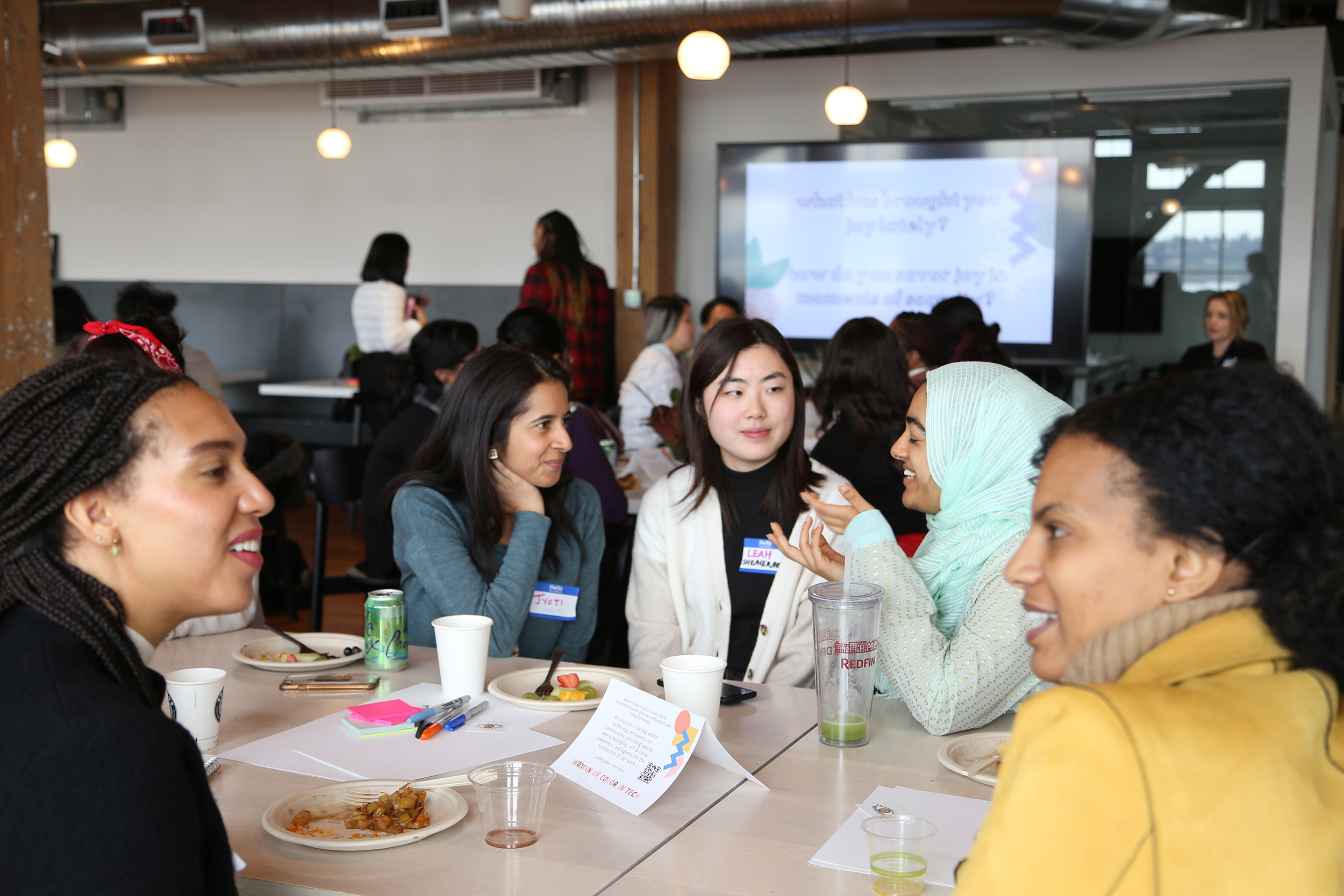
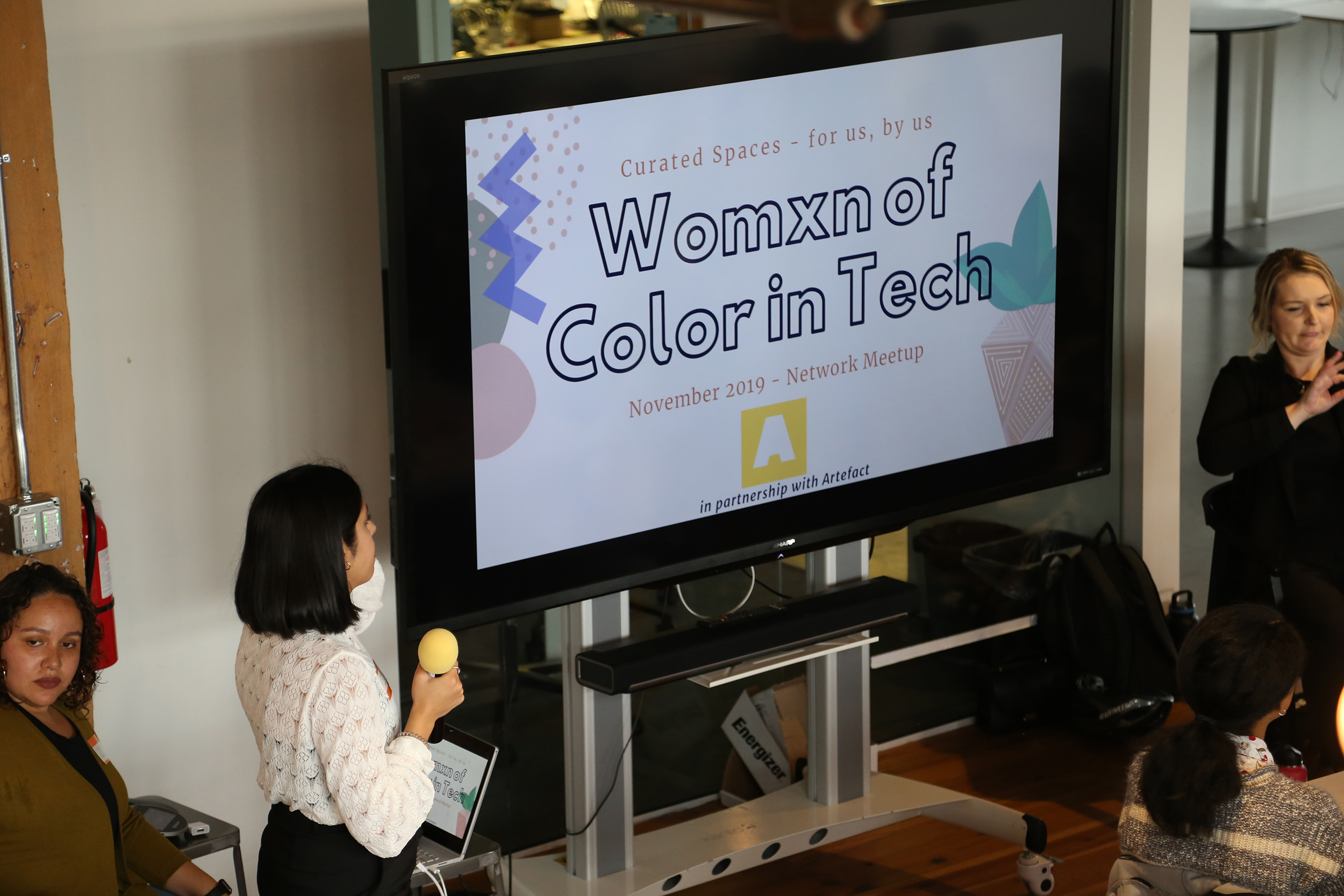
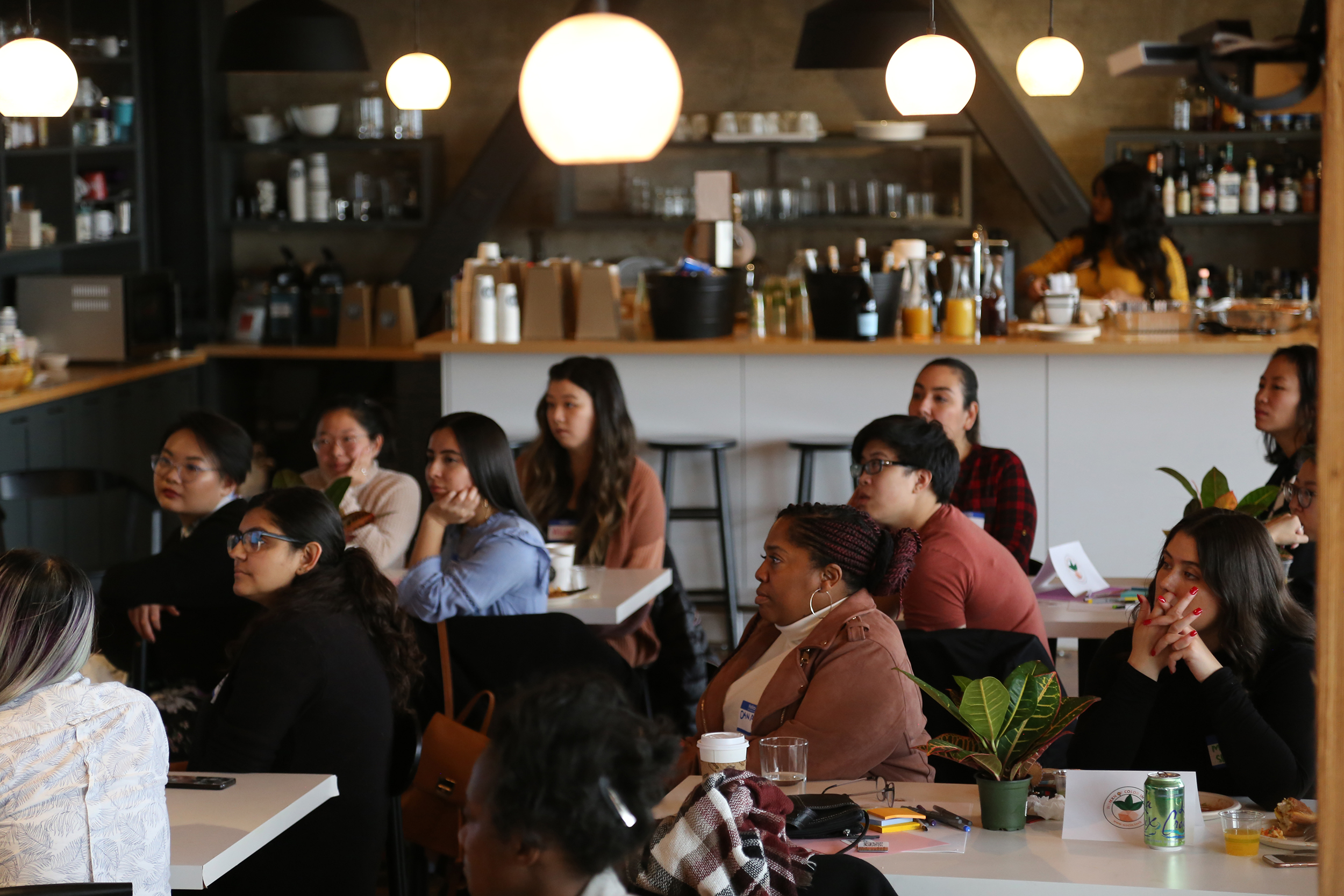
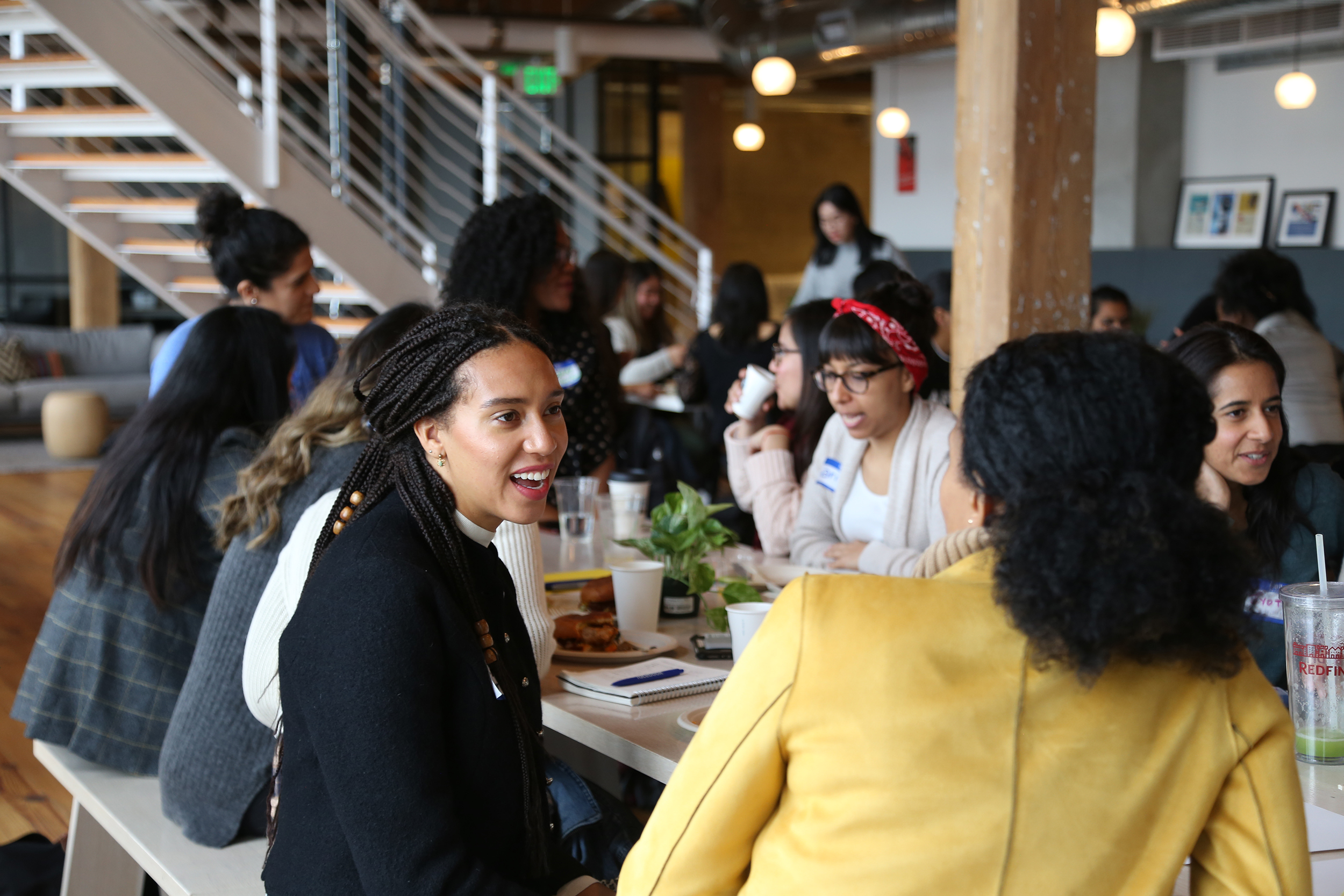
This November, Artefact was delighted to partner with Womxn of Color in Tech to host a meetup for our community. We welcomed 65 women of color to the studio to talk tech and social justice – the first event of its kind for Artefact.
Womxn of Color in Tech is on a mission to cultivate spaces and programs that explore and design a world of technology that centers around womxn, grrls, and communities of color. I was thrilled to meet founder Janell Jordan, as one of my goals at Artefact this year is to help foster a community for women of color.
Working at Artefact is the first time in my career where I’ve had a woman of color as a mentor, and the first place I’ve worked where someone has advocated for me as a woman of color. It has changed how I see myself and how I show up in the workplace. I wanted to create a space for others to feel the same.
In the tech industry, women of color are often in environments where our peers or those at the leadership level don’t reflect us. We don’t have the space to talk about our shared experiences, reflect, and get advice from one another.
An understanding of “space” guided our intentions for the day – from opening with a moment of gratitude for the Duwamish tribal land we inhabit, to ensuring all participants were empowered to participate through accessibility support like ASL interpretation.
The meetup centered around creating a welcoming place for women in tech from different backgrounds and in different places in their careers to connect with each other. We shared experiences – positive and negative – and explored ideas around creating allyship and workplace support. The day was filled with inspiration, mentorship, and empowerment – all set to a soundtrack of strong women artists of color.
One of the topics we touched was on what brings you happiness and how you hold onto it. I’ve thought back to this meetup often as one of those moments. I think about the people I met, the stories shared, and the feeling of being able to show up as our true selves at that moment. In an industry where we often feel isolated, there are other women of color out there looking – and making space for – the community.
I look forward to continuing Artefact’s partnership with Womxn of Color in Tech and am particularly excited to support a youth program that will bring young women of color to our studio next year to job shadow women at Artefact.
“Had a blast at the WOC in Tech meetup this weekend. I learned a lot. I loved meeting new people and hearing about their experiences and how they got to where they are now. I need to go to more things like this!”
Meriel M. – UX Designer
“What a great time sharing experiences and finding solutions to bring down barriers in the workplace related to diversity and inclusion. Met some amazing and inspiring women today, and I’m looking forward to seeing what else Womxn of Color in Tech will be working on!”
Lita G. – Systems Engineer
“I can’t stop thinking about the women I met at the Womxn of Color in Tech Summit last week at Artefact. Their stories, some as traumatizing as my own in Corporate America, assured me that I’m not alone in the struggles we’re facing daily to EXIST in spaces we may not always feel we belong in or sometimes not gracefully welcomed into…I hope more black women and women of color continue speaking up and out so things will continue to change and get better.”
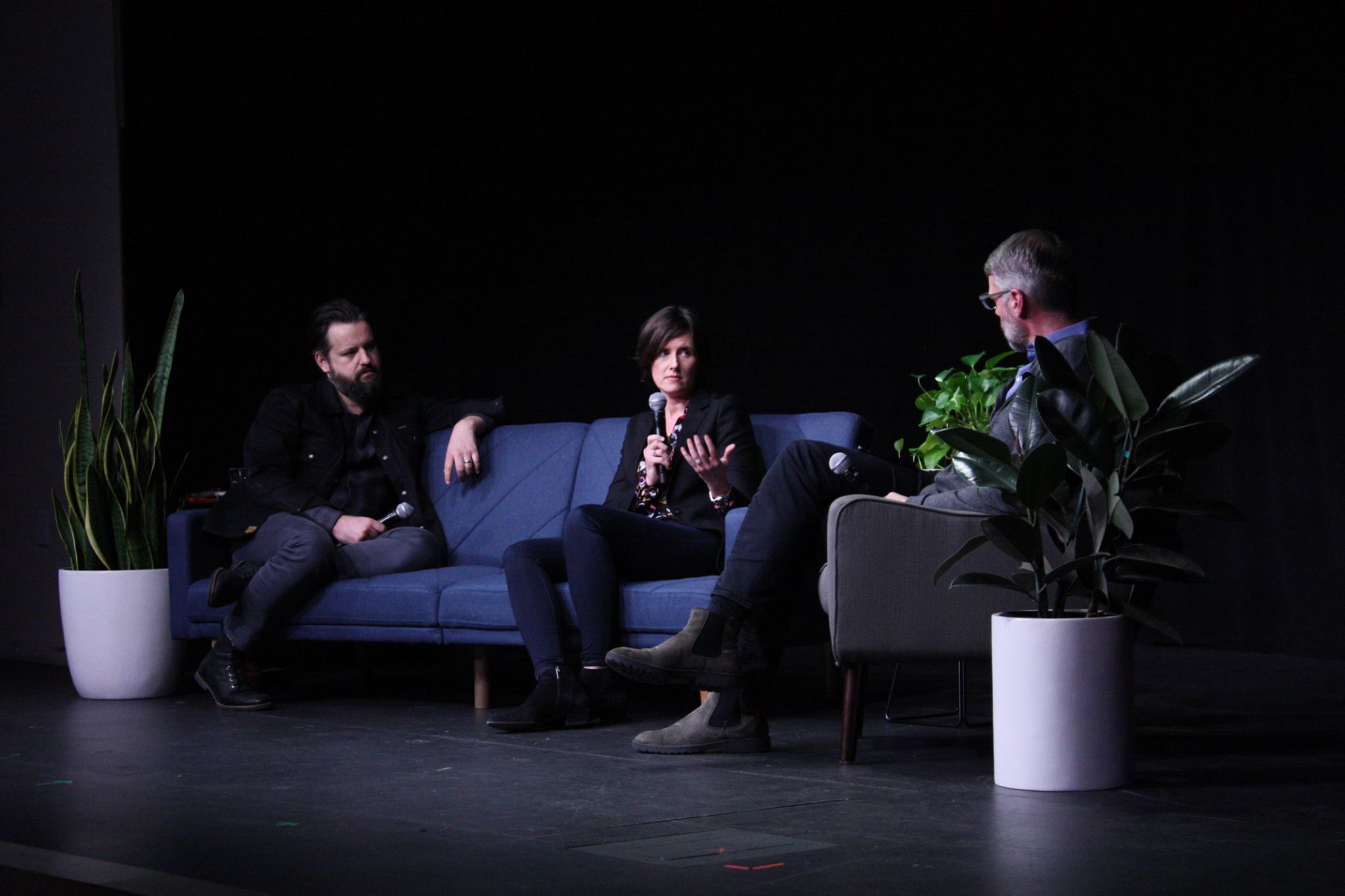
It’s not every day
that you get to meet an icon. I had the opportunity to speak with a personal
hero of mine last week, indomitable tech journalist Kara Swisher, who was in
town giving a talk Artefact organized in partnership with Seattle Arts and
Lectures. As witty and wry as ever, her conversation revolved around the pertinent
themes of technology usage, industry regulation, and some pointed commentary on
Jack Dorsey’s beard.
In reflecting on Kara’s lecture and recent high-profile criticism of the tech industry, however, I got to thinking about the current all-or-nothing approach to technology in our culture. The general response to Big Tech’s many missteps has been to run away from it – be it by limiting our screen time or scrambling to #DeleteFacebook. This abstinence-only reaction is dangerous because it doesn’t help us understand how to relate to the ubiquitous technology in our lives. Rather than retreat from technology, we need to figure out how to coexist with it. I’ve been thinking about our evolving human relationship with technology in three ways:
1. Governance and technology need each other.
From airbags to the Internet, technological innovations often
wouldn’t exist or thrive without government investment, subsidy or governance.
When we look across the Pacific to China, we see a state that is investing
heavily in tech and is extremely innovative. More
often than not in unethical ways.
When it comes to tech oversight, Silicon Valley has long
pushed the narrative that they are the good guys in a struggle between American
tech interests and authoritarian foreign governments – “It’s Xi or me,” as Kara
put it, in reference to Chinese President Xi Jinping. This fearmongering has
scared politicians into thinking that we should not regulate the U.S. tech industry
for fear of becoming the kind of Big Brother state we see elsewhere in the
world.
Yet we can’t accept that logic at face value. We don’t want authoritarian states running the next information age, but we also must question ourselves and Silicon Valley on the products we create and how they impact society. The conversation won’t be easy for the tech industry or government. Throughout history, industry in the U.S. has been bad at regulating itself (we only need to look at how dangerous food used to be before regulation as an example). However, one thing we often forget is that government support and intervention often spurs innovation. Elon Musk, for example, received $5 billion in funding from the U.S. government to finance SpaceX, Tesla, and Solar City. The tension between Silicon Valley and regulatory bodies is only when they fear regulation will keep them from amassing huge concentrations of wealth.
2. Beware of “benign” organizational culture.
There’s an important connection between the perception of
tech companies as having a “harmless” organizational culture and the lack of
regulation in the tech industry. We don’t hear about this relationship as often
as we should. Kara touched on the infantilization of Silicon Valley leadership
and the misguided notion that they’re just a bunch of kids tinkering in
garages. In truth, they are some of the most powerful individuals in the world
making decisions that affect billions of people across the globe. Just because
they wear hoodies and flip flops and don’t look like a Wall Street executive
doesn’t mean they aren’t as powerful – or savvy.
In Artefact’s social
media systems map, we identified how “organizational CULTure,” as we call
it, affects the design of social networks. The idea that technology is neutral –
and the lack of priority around fixing the problems facing social media – has to
do with an organizational culture devoid of diversity at the leadership level.
So many of tech’s decision-makers have not been personally touched by the
negative impact of their products or suffered as much as other people have at
the hands of their creations. Sri
Lanka and Myanmar
come to mind.
Of course, we need the skills and talents of tech leaders to work toward solutions, but they currently do not have an incentive to improve a harmful experience that they have not had – and will never go through – on their platform. In fact, they profit from this lack of intervention. We need to expand our definition of stakeholders. We need to bridge the gap between Silicon Valley and those who don’t have a seat at the table yet bear the brunt of its negative consequences. We also need to treat leaders in tech as the formidable industry titans that they are, and hold them responsible for the outcomes of their products.
3. Social media is not equivalent to climate change.
I’ll be the first to criticize social media for its negative
consequences in the world, but I’m starting to feel fatigued by the
vilification of social networks as the root cause of all of our problems.
Particularly when this criticism comes from those who have a vested interest in
cooperating with the tech industry.
The argument that all of the tech industry’s problems have
to do with the attention economy are starting to become platitudes. Cable TV
brought us ideological news programming. Traditional media were gatekeepers to
information. We can’t forget that the world was imperfect before social media.
These platforms are exacerbating existing problems, and it is dangerous to
ignore the exogenous or underlying factors that are driving issues like bullying
and disinformation campaigns online.
We start to discount our own arguments when we fail to
acknowledge what might be positive about having social networks. Online
communities have helped marginalized people find and support each other. Black
Twitter, for example, is an important outlet that gives many people a voice
they had not had before. I get value out of social networks that help me learn
from people I don’t normally interact with in real life. I can’t invalidate the
entirety of these social media experiences. It’s starting to feel like we’re
throwing out the baby with the bathwater.
Rather than discount Big Tech altogether, let’s work to design products responsibly, embrace
thoughtful regulation, and shape our individual usage in healthy and productive ways. Technology
doesn’t have to downgrade humanity – unless we let it.
Ability and flexibility: Designing technology for everyone
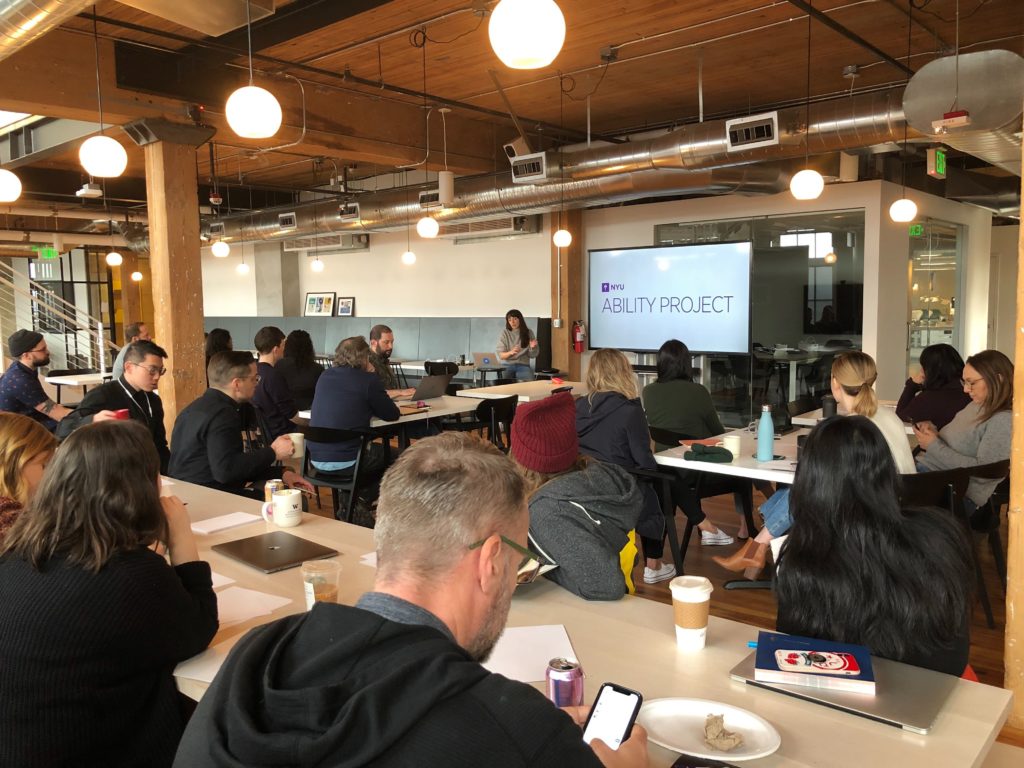
Last summer, in a dark auditorium somewhere around Minneapolis, EYEO hosted a series of lightning round presentations. Among the presenters that night was Claire Kearney-Volpe, a doctoral candidate and research fellow for the Ability Project at NYU. At the outset of her talk, she presented a simple form for the audience to fill out. That form had one not-so-subtle transformation: it was all set in Wingdings, a font designed as a series of glyphs that rendered the form incomprehensible.
Why Wingdings? Oftentimes, the simplest tasks – whether it’s entering a building or browsing the web – can be tedious, or even impossible, depending on where someone falls on the ability spectrum. Microsoft’s Inclusive Design Toolkit posits that, “If we use our own abilities as a baseline, we make things that are easy for some people to use, but difficult for everyone else.” Claire used Wingdings to transport a group of designers and coders to a world where they were no longer accommodated for.
I was floored. Her belief in a more purposeful and accessible web deeply aligns with Artefact’s values. To create a better future, it is the responsibility of designers to approach every project with the mindset of accommodating a wide range of ability. By doing so, technology is more usable for everyone.
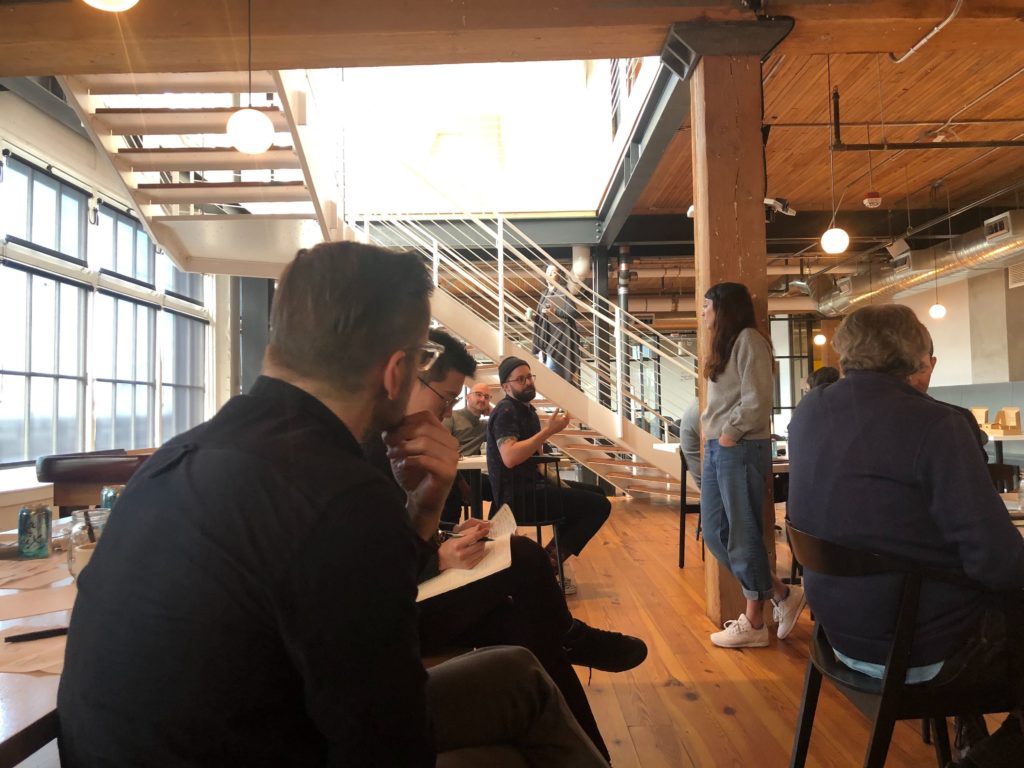
I invited Claire to conduct a two-day, company-wide workshop at Artefact to help us further strengthen our skills around inclusive design – that is, design that is meant to be accessible to, and used by, as many people possible. I left with three key takeaways on how to approach accessibility and inclusion in my work.
1. Inclusive design makes better products for everyone
Disability
is an inherent part of the human experience. There are more than 53 million people
that live with some sort of disability in the United States. That’s roughly 1 in 10
people. Those numbers rise significantly, to about 1 in 5, when we factor in temporary,
cognitive, or situational disabilities. Design has a major impact on how easily someone can
interact with the tech products that our society is so reliant on. Designing
inclusively doesn’t just affect those with disabilities, either. It broadens the reach of
what we create from a product for many people, to a product for everyone.
“It
could be argued that everyone at some point in their lives will experience some
form of disability – whether through injury, medical condition, or the natural
aging process,” Claire says. “This is particularly important
because technology is increasingly integrated into every form of our lives,
from work and education to entertainment. It’s important we strive to ensure
that people with a range of abilities can participate in these activities.”
This
makes sense from both a business and ethical perspective. By explicitly providing a solution for someone who is hard
of hearing, for example, the same design solution is also indirectly helping
someone in a noisy bar. According to the World Wide Web
Consortium for accessibility on the internet, there
is a direct business case for inclusive design. “Businesses
that integrate accessibility best practices are more likely to be innovative,
inclusive enterprises that reach more people with positive brand messaging that
meets emerging global legal requirements.”
The most interesting value, however, is societal. Designing inclusively creates a more equitable world, where everyone has equal access to products, opportunities, and experiences. There is far less opportunity for backlash, alienation and frustration. We no longer leave people behind.
2. Design for flexibility of use
Designers tend to create tech products for a singular user
experience. In other words, they are focused on a large group of people who
have a similar range of ability. This approach has potential to mount measurable frustration by marginalizing
all other ability groups. Addressing a narrow range of ability limits the equity
that technology should provide. According to a Pew Research Poll, Americans with
a disability are three times less likely to even go online. If design can be
more inclusive, there is an opportunity to increase equity and access to the
internet.
As the grasp of the experience age tightens its
grip on our available senses, it is increasingly important to design systems
that are as flexible as possible. In order to accommodate everyone, there
should no longer be just one way to use products.
How can we improve the technology we create? There are varied
industry perspectives on flexible design in practice. Claire suggests starting any
project with the baseline question, “Is there only one way to interact with a
system, or does it offer some flexibility of use?”
Ronald Mace, a pioneer in
accessibility, led a group at North Carolina State University in creating the Universal Design movement. The
movement and its principles aimed to facilitate the creation of singular,
flexible design solutions to accommodate all users within a variety of spaces,
from architecture to product design.
The common critique of Universal Design is that a singular design solution can’t accommodate the variance and range of ability. Designers should not expect that it is possible for a one-size-fits-all solution. “Inclusive design might not lead to universal designs,” according to designer Kat Holmes. “Universal designs might not involve the participation of excluded communities. Accessible solutions aren’t always designed to consider human diversity or emotional qualities like beauty or dignity. They simply need to provide access. Inclusive design, accessibility, and universal design are important for different reasons and have different strengths. Designers should be familiar with all three.”
3. Start early and POUR
To create products and experiences that are flexible, designers
must address accessibility and inclusion head-on, from the start of a project. Often,
designers view accessibility considerations as features and push them to later
iterations in an effort to stand-up products quickly. That should not be the
case. “[Accessibility] can’t be a pixie dust that you sprinkle on top of
the program and suddenly make it accessible, which is the behavior pattern in
the past,” quips Vince Cerf, a leading
thinker in the accessibility space and known as one of the fathers of the
internet.
As you begin the design process, it is important to note how
people are using the existing systems that are in place. “We should not only focus
on the accessibility of product consumption – consuming things in accessibility
– but production or authorship too,” Claire points
out.
The Designer’s Guide to
Accessibility Research from Google provides an extensive methodology that is extremely
helpful when beginning a new project. It includes tactics such as seeking out assistive technology to use when testing
your design, and ensuring that you get perspectives from a wide swath of people
who are in different places on the ability spectrum. This can help you better identify
potential accessibility interventions and how they would improve your product’s
flexibility and usability for a wider population.
When creating digital solutions, designers should adhere to the
POUR methodology: that the experience is Perceivable, Operable, Usable, and Robust.
POUR is a simplified approach to the extensive Web Content Accessibility
Guidelines, the industry standard for evaluating the accessibility of
digital products. Implementing the POUR principles helps designers create
flexible interaction systems that accommodate a range of inputs and users; can better
parse websites and operating systems; helps people contextualize and understand
content in different ways; and predicts behavior based on patterns used in
other places and on other devices.
WebAIM, a leading accessibility advocacy foundation based out of Utah State University, puts its best: “The POUR principles put people at the center of the process, which, in the end, is the whole reason for even discussing the issues [of accessibility].”
Inclusive design is human-centered design
Technology
has helped people achieve more than we could have ever imagined, and it holds
enormous promise to continue improving the human experience. Yet when we design
technology for a limited range of ability, we leave many behind.
“Some
of the things that are happening in [new technology] around accessibility is
full of experimentation; it’s like the Wild West,” Claire told me. “I get
excited, but I am grounded in the reality that there is a lot of room to
improve with existing technologies.”
Our peers have built an extensive body of inclusive design research and methods to draw from. It’s now our responsibility as designers at the forefront of technology to approach our work as thoughtful advocates of inclusive design. We have the tools, conventions, and patterns to fix it. Let’s get started.
The Metaverse. The AR cloud. The Magicverse. Mirrorworld. Whatever you call it, the concept is coming: a digital layer of reality that coexists over the physical world. It’s been hailed as a new frontier in computing and the “next great digital platform,” according to WIRED. It may not be tangible at the moment, but 10 years from now this digital layer – I’ll call it the AR cloud – will be a fundamental piece of the computing landscape.
Despite all the potential of the AR cloud, such a radical shift in the human computing experience presents a very real possibility for negative consequences or even abuse. We’ve experienced firsthand how technology platforms can shift society in unintended ways, and it is our responsibility as designers and technologists to create the AR cloud responsibly.
This got me thinking about what a Mirrorworld “Bill of Rights” would look like, and what protections people should have in the AR cloud. A disclaimer: these aren’t legal or political statements, but food for thought around a shared understanding of reality, privacy, ownership, and freedom. I hope these “rights” inspire conversation around how a future AR world can impact people and communities.
The Mirrorworld Bill of Rights:
1. One Reality for All
2. A World Public by Default
3. The Right to Digital Property
4. Freedom to Assemble
1. One Reality for All
Augmented reality will eventually be our only reality. The technology each person chooses to put on will mediate our consciousness and understanding of the world. Today, our screen-based digital services have already created filter bubbles that have ruptured a mutual understanding of fact and fiction. A shared, public reality between different AR systems must be the default experience.
AR is inherently
private. Two people standing side by side cannot see each other’s content or
activity. Without the ability to read the social cues that help us understand
each other in the physical world, this uncertainty leads to miscommunication,
social anxiety, and the “glasshole” effect. What’s more, companies making AR products have a track
record of creating walled gardens that don’t allow sharing between platforms. Unless
a bridge is engineered between competing devices, it would be impossible to
share an experience in AR. People already hide behind cell phones, but at least
you can easily look up or show the person next to you that cute dog photo. In
AR, that’s impossible.
The AR cloud needs a simple, standard method for sharing experiences between devices that any headset can leverage. If sharing in AR requires effort or is harder than holding up a phone to someone next to you, it will train people not to engage. What if the AR world was shared by everyone using it? Think of it as a single massive multiplayer online game in the real world where everyone is playing together.
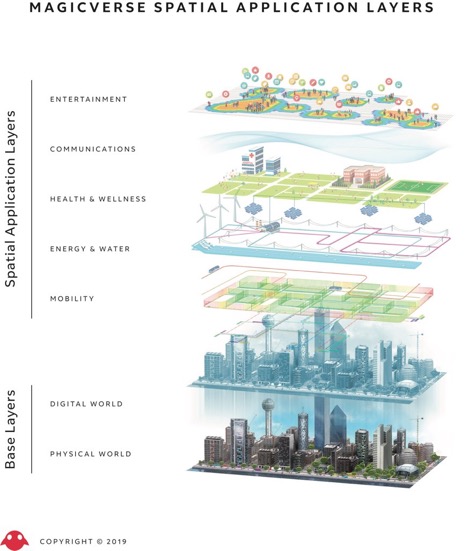
One reality for all doesn’t mean that two people next to each other would always see the same things. I love what sci-fi novelist and Magic Leap Chief Futurist Neal Stephenson proposed for the MagicVerse: layers you can turn on and off depending on task and mode. Perhaps there will be a public layer, a transportation layer, a learning layer, an Uber layer, a social layer, a private layer, etc.
Image Credit: Magic Leap
2. A World Public by Default
A single, shared AR
world is important, but in order to connect and engage, we need to know how to
act in this new medium. The AR cloud shifts the boundaries of physical
possibility and allows for behavior in ways that can be disorienting and
suspicious. In order to have a shared understanding of social and behavioral
norms, we need an AR world that is
public by default.
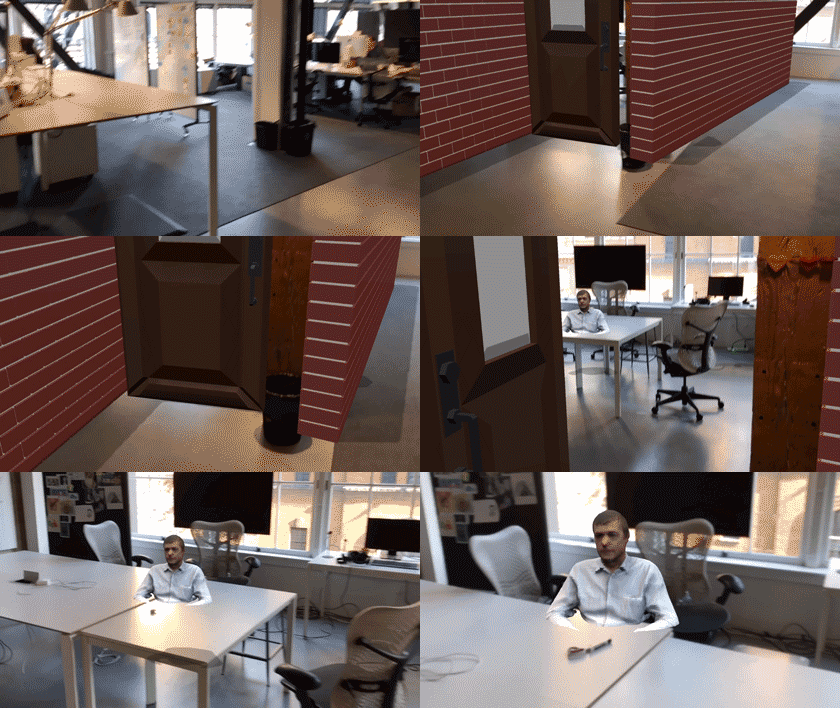
What does this mean? Take privacy, for example. Everybody wants to protect their privacy but interacting with invisible content or blocking people without their knowledge in the AR cloud creates divisive behavioral norms beyond what is possible in the existing, physical world. An AR world that is public by default doesn’t mean our actions in AR are always visible, but that we publicly signal to others that we want privacy in the moment – just like in the physical world. How do we do that? Meta AR suggests that users “design their own privacy within the rules of the shared space, not by breaking them.” This could mean using a virtual door or walls to signal that a private work session is in progress. This door could suggest the social cue to knock and join the private meeting. Using Torch’s iOS AR prototyping tool I mocked up this quick scenario to get a feel for privacy boundaries.
Made in Torch AR using free assets from Google Poly and Sketchfab.
Now let’s imagine you’re in the park and see someone walk by in a different AR layer than you. Your AR glasses let you know that they are in a “Pokemon layer.” You don’t need to see exactly what they are doing, but their activity status might reduce your suspicion and be an invitation to connect. You choose to join them, and their layer expands to surround you as well. Now you can see what Pokemon they are battling and choose to challenge them when they finish.
Created with Torch 3D on iOS using free Sketchfab assets.
Privacy veils and AR layers are not foolproof. What happens if they are overused or if a group uses them to spitefully exclude others? My guess is that existing social norms would dissuade this kind of behavior, but we can’t know for sure until people engage together in AR. Who will lead the charge on creating this open framework? Magic Leap? The W3C Immersive Web Group? Microsoft and their new open philosophy? There isn’t a solution yet, but the conversations are happening and companies like 6D.ai are starting to create the technical layers required. The bottom line is, it’s important that people can exist inside the AR cloud together and share the same experiences.
3. The Right to Digital Property
In order to create persistent and shared experiences, the AR Cloud requires maintaining a highly detailed 3D model of the world and everything in it. This will be created by cameras on the AR headsets we might all be wearing. Ubiquitous cameras and centralized control of the network have the all the ingredients for the ultimate surveillance state. We must protect the right to privacy and digital property in AR environments.
One idea is to apply the
4th amendment to the AR Cloud so that
no government, individual, or corporation has the right to search the interior
3D model of your dwelling, workplace, audio, user location, and property
without a warrant. If you own or lease the physical space, you should own the
digital space as well.
How might that work? Instead of companies like Facebook, Amazon, Google, and Microsoft storing 3D maps of our homes and businesses, imagine if each home and business hosted their own device that stored this data. These edge computing devices would give individuals complete control over the data of their digital space. This personal data vault could also store 3D digital memories recorded in our private spaces, so you can replay that important meeting, baby’s first steps, or that winning ping-pong point.
In order to prevent surveillance and spamming of private spaces, we would need a public property ownership record. Organizations like Bitland are already making headway in decentralizing ownership records using blockchain. A record of private and public lands would protect private spaces while enabling a shared common space.
4. Freedom to Assemble
Public spaces like
parks, streets, and airspace are equally important in the AR cloud. Should
cities, counties, and countries maintain public AR spaces like they do public
physical spaces? We’re a long way from an answer to these questions, but until
then, creators and technologists will need to rely on good defaults to set the
norm. We can start by drawing from the First Amendment: people must have the right to peaceably assemble in AR public spaces,
regardless of borders.
This is exciting because AR makes public spaces more valuable and brings more people together in new ways. This physical and digital commons could be a bridge between different nationalities, cultures, and identity groups, helping us learn new things and gain new perspectives. People could travel around the world in an instant, “land” in a location, see others walking on the street in real time, and go have a conversation with them. Real-time translation could even allow you to talk with people who speak a different language.
Compilation of Google Earth VR, SketchFab and Sketchbox 3D.
It can also give people access to public spaces that would otherwise be impossible for them. For example, I could go on a walk in the park with my wheelchair-bound father or my family living in different city. I could play Fortnight in Central Park with my remote friends. I could even dogfight in and around the Eiffel Tower.
Freedom to assemble applies to private spaces as well. My kids and I could build out a physical Fortnight level in the backyard using wood, dirt, and bricks. Once it’s constructed and scanned, we could share out that particular part of the yard publicly and invite players from around the world to play.
Moving forward
We’re only starting to
understand the scope, complexity, and possibilities of the AR cloud, and the
rules are still being set. I hope we can create a world that bridges the gaps
between people, rather than simply strengthening the bonds we already have. Let’s
create a world that promotes the ability to think for ourselves. A world where
individuals have control and ownership over the reality they live in. A world
where the public commons are a safe place where anyone can travel to learn,
discuss, and play together.
I believe these “rights” are on the correct track, but they are thought experiments in an evolving medium. I don’t have it all figured out and would love to discuss further on Twitter @paulhoover.
Editor’s note: In partnership with Design for America, Artefact co-CEO Rob Girling moderated a panel discussion February 2019 at Airbnb’s San Francisco headquarters on trust and social impact. The event featured Alex Schleifer, VP of Design for Airbnb, and Valerie Casey, Head of Design at Walmart. Here, Rob builds on his opening remarks to highlight Artefact’s point of view on product trustworthiness as a component of responsible design.
At Artefact, we focus on designing digital products and services that are trustworthy. Trust is a complicated design challenge, but it can be meaningfully achieved through the practical application of ethics – here’s why it matters:
Machine learning algorithms hold vast
potential, but with their great power comes significant responsibility. Over
the last year, as perspectives around such algorithms continue to mature, almost
all technology companies have endeavored to establish (with mixed effect)
ethical principles, boards, and codes of conduct. Their goal? Get ahead of the
implicit but very concerning risks associated with the algorithms going wrong for business, people, and society.
As a result, a once highly philosophical and
impractical debate on ethics in innovation circles is increasingly relevant to
tech – with deep implications for product design. Correspondingly, “responsibility”
has begun to replace “desirability” as design’s primary value add, and a new focus
on ethics has supplanted our discipline’s longtime focus on beauty and delight.
This overall shift from a governance perspective on ethics to the practical awareness
of ethics in the product development process represents a significant moment
for the tech sector.
The business as well as moral
imperatives could not be clearer.
In Artefact’s recent report, Can Social Media Be Saved?, we show that social media technology platforms do not inherently generate positive outcomes. Unchecked, they are also highly susceptible to manipulation and exploitation, which, as we’ve seen with Facebook, can degrade trust and profitability.
Strong ethical principles, policies,
and practices are essential to any company that wants to build and maintain
trust with its stakeholders – from employees, customers, and partners to
governments and shareholders. At the center is a code of ethics that helps make
real the organization’s mission and brand promise. When actions (or inaction)
appear in conflict with the organization’s ethical code, the trust relationship
is undermined and the estimation of the organization in the eyes of its
stakeholders can be dramatically reduced, driving loss of share value, customer
churn, slower market adoption, low employee morale, and even employee
attrition.
As two of the world’s largest
companies, Apple and Microsoft, increasingly view their brands and products through
an ethical lens, consumer expectations around ethics are on the rise, helping
to set new norms that are pushing aspiring organizations to follow suit. Additionally,
competitive advantages exist for companies that choose to apply a strong
ethical perspective into their product designs.
At Artefact, we help our customers envision and develop trustworthy technology products using a methodology that we call Responsible Design, which prioritizes long-term outcomes, the alignment of corporate mission with practical ethics, and deeply understanding and resolving competing stakeholder interests as much as great design execution. Throughout, we approach design challenges with a systems lens, asking hard questions about unintended consequences as well as net impact to ensure that the design solutions we deliver to market are positive for business, people, and society.
There are of course
nuances to every client engagement, but Artefact’s commitment to product
trustworthiness is unwavering. We believe designing for trust is a critical, increasingly
competitive asset in today’s rapidly evolving marketplace and strongly encourage
organizations to integrate ethics into their core product offerings. Responsibly
aligning the potential of technology with its future impact is also fundamental
to creating a better tomorrow for all of us.
Using blockchain to reverse climate change: A conversation with Nori
From smart contracts in the homebuying process to swiftly and securely transferring money overseas, blockchain solutions are becoming increasingly common in sectors such as finance, real estate and the Internet of Things. Distributed web solutions like blockchain provide crucial security and accountability functions that transform our relationship with data. In other words, blockchain delivers trust and transparency – two things we at Artefact take very seriously when it comes to technology and its impact.
At Artefact, we’ve been exploring what role blockchain can play in wrestling with the many intractable, systemic problems facing our world. Moreover, as designers and technologists, how can we harness blockchain solutions in ways that contribute to accessible, equitable and sustainable outcomes?
One of our favorite companies working at the intersection of blockchain and social impact is Nori, a Seattle start-up creating a blockchain-based marketplace for removing carbon dioxide from the atmosphere. We sat down with Nori’s Founder and CEO Paul Gambill to talk distributed tech, social impact and seaweed.
What does Nori do and how did you get the idea for it?
Nori is on a mission to reverse climate change. We are building a marketplace that makes it easier for people to pay to remove carbon dioxide from the atmosphere. Climate change is a really straightforward arithmetic problem: there is simply too much greenhouse gas in the atmosphere. What we need to do is draw it out – undo the emissions – to restore the balance of the carbon cycle and ultimately reverse the effects of climate change. Most people working in the environmental space are trying to make climate change less bad, but nobody is trying to actually reverse climate change – until now.
Why do you think carbon removal isn’t more widely discussed as a solution for combating climate change?
People make a moral hazard argument against carbon removal. Many environmentalists don’t want a focus on carbon removal because they think that creating technologies and processes to remove carbon would give humanity a license to continue emitting carbon dioxide. What these environmentalists want to see is everyone reducing emissions.
The fact of the matter is, climate change is simply too far gone. Even if we halted all emissions tomorrow, the environment will not naturally recover to a place of balance without serious harmful impact. According to the math, we have to draw carbon dioxide down. There’s no other choice.
How does Nori use blockchain to help reverse climate change?
In the Nori marketplace, buyers pay to remove carbon dioxide from the atmosphere and suppliers remove the carbon dioxide. When a supplier in our marketplace removes carbon dioxide from the atmosphere, we have an independent, third-party verifier come in and assure that that carbon has been removed according to peer-reviewed standards. Nori then issues that supplier a Carbon Removal Certificate (CRC) that exists on the blockchain. The CRC can be sold to a buyer in exchange for one NORI token. One token always purchases one tonne of carbon dioxide.
We do this on the blockchain because proving who has removed carbon dioxide, who has paid for it, and who should get credit has been a longstanding problem in legacy carbon markets. We are eliminating those risks by putting the process on the blockchain, making it incredibly straightforward to prove who owns what and at what time.
The other half of your business is the NORI token. Why is a token necessary for your carbon removal marketplace?
Creating the NORI token as a separate asset from the CRC gives us the ability to create a global, market-driven reference price for carbon dioxide. One NORI token will always be used to buy one tonne of carbon dioxide. The price of the Nori token in the exchange markets – relative to the dollar or to bitcoin or any other currency – can be seen as a global reference price, sort of like Brent Crude or West Texas Intermediate pricing for oil.
A global carbon price is also useful for people who aren’t participating in our marketplace, like policymakers, economists, auditors and anyone else who needs to know how to value carbon. These groups have wanted a price for carbon for decades, and Nori does that by creating the cryptocurrency asset.
Why hasn’t carbon pricing worked in the past?
There are lots of problems with the legacy carbon markets. One major point is that when people talk about putting a price on carbon, what they’re often trying to do is create a cost for emitting carbon, like a carbon tax or the cap-and-trade market in the European Union. They’re putting a price on what it costs to emit. We think that’s a very negative action.
Nori wants to turn carbon dioxide from a waste product into a new value stream. The carbon price Nori is talking about creating is the value of removing one ton of carbon dioxide. Think about carbon dioxide like garbage, where for decades we’ve been throwing our garbage out in the street and nobody has been doing anything about it except try to throw less garbage out. The trash is still piling up out there. Nori makes it possible for the garbage collectors to get paid for coming around and picking up the trash.
We’ve discussed on our Reversing Climate Change podcast why carbon pricing has consistently failed in the past if you want to dig into the nuance.
What are some common concerns companies have with a blockchain-based carbon removal marketplace and what’s your response?
The cryptocurrency aspect of the Nori marketplace makes some people wary. They’re concerned about the volatility of the currency and what we at Nori are doing to ensure that the Nori token doesn’t fluctuate wildly which makes it difficult and unpredictable to use. There’s a lot more detail in our white paper, but the short version is that we are slowly releasing NORI tokens over time, so that we should as closely as possible tie the value of NORI to the value of removing one tonne of carbon dioxide.
They are also concerned about security. If you lose your bank account password you can get that reset, but if you lose your password to your cryptocurrency wallet, that money’s gone. Those concerns are valid and real, but there are plenty of tools and solutions out there that make this workable. Blockchain is just something new that companies must get used to. When talking about large sums of money, people are hesitant to commit to something that’s entirely novel. It’s similar to when credit cards were first used to make payments for websites. People were uncomfortable, but then tools were developed to make it safer. The same will happen and is happening with cryptocurrency.
Speaking of novel solutions, how do you design for and around blockchain infrastructure that your customers may not yet relate to or have as much trust in?
It’s true that existing blockchain applications are not user friendly at all. My background is in computer engineering, I worked in software development my entire career, I’ve been using bitcoin and blockchain technology since 2010, and even I find these applications incredibly difficult and confusing to use. There’s a lot of low-hanging fruit in terms of what designers can do to improve the ways people can interact with the blockchain.
Ultimately, the future I want to live in is where blockchain is something that simply runs in the background, just like how most people don’t know how HTTP works to load pages in your web browser or how SMTP works to send e-mails. These are protocols that don’t matter to the user experience. At the end of the day, just don’t make users think about it. They shouldn’t have to learn how blockchain or cryptocurrency works at a fundamental level. Only show them what they need to know in order to make responsible decisions about how they need to interact with the application.
What business opportunities do distributed web solutions like blockchain present?
Blockchain isn’t a cure-all solution for everything and there are many cases where a centralized database is still a better solution than blockchain. There are many fantastic use cases for blockchain, however. For example: issues of provenance (proving who owns what at what time, like with Nori’s CRCs); creating markets; and creating incentive structures to encourage people to make some kind of behavioral decision using a token.
The use of blockchain is often not going to be anything the consumer sees on the front end, but will instead power behind-the-scenes solutions, such as in the supply chain. Walmart, for example, tracks the movement of their produce from seed to sale using the blockchain so that if there is some sort of bacterial outbreak they can trace it to exactly where it came from and who’s responsible. T-Mobile uses blockchain for handling the audit trail for an internal identity platform.
Companies with operations that can use better tracking or could benefit from incentive structures can find the most opportunity in distributed web solutions. I can guarantee you that many large Fortune 500 companies are experimenting with blockchain solutions right now.
Last but not least, what does “Nori” mean, anyway?
There are lots of different ways to sequester carbon dioxide, and one really cool ecological approach is to grow kelp or seaweed. It’s very easy to do using just rope, water, and photosynthesis. “Nori” is Japanese for seaweed!
You’ve probably seen someone with a VR headset jump or lose their balance in reaction to their virtual surroundings. Although it may seem strange to the observer, VR is a highly persuasive medium capable of having a deep impact on the brain. Just how persuasive? VR experiences have the capacity to alter our emotions and behavior well after we unplug.
VR is still an evolving medium, but we know enough about its influence to give us pause. There is an ethical responsibility to explore the impact of VR experiences on users and empower them with awareness and control. Let’s look at how VR influences emotions, perceptions of self and behavior – and what we can do to support users along the way.
Emotions transcend the virtual
Social interactions in VR aren’t constrained to the hardware. Not only are the thoughts and emotions that bubble up during VR experiences genuine, we bring them back into the physical world with us long after the headset is gone. They affect us just as much as an in-person interaction, giving the emotions we feel in VR the healing power of a trusted friendship or the psychological stress of a bully.
The 360-degree short film Clouds Over Sidra is a compelling example. The video captures the perspective of a 12-year-old Syrian girl living in a refugee camp with thousands of others. As a viewer, you become fully immersed in her world – making eye contact with others in the camp, who in turn react to your presence. The experience often triggers emotions as if you were physically there. In fact, the same mirror neurons fire when we perform an action ourselves as when we observe someone else perform the same action. This makes VR experiences a powerful way to build empathy.
Of course, social interactions are far too often negative. I hadn’t considered the significance of bullying or abuse in VR until reading about one woman’s experience in a multiplayer game. Despite having the same non-gendered avatar body as other players, the author’s partner in the game mission recognized her female voice and proceeded to grab and pinch where her chest would be, virtually groping her. Although it didn’t look or physically feel like assault, remember the mirror neurons. Our brains can’t tell the difference. VR bullying and abuse have real, emotional repercussions.
How do we give users the opportunity to experience the emotional benefits of VR while protecting them from abuse? A good first step is to give victims the tools to protect themselves, such as the ability to evade and block other users. Platforms could require persistent bullies to undergo empathy training in VR, as well. Massachusetts preparatory school the Concord Academy created a VR project specifically to combat bullying. Users experience a bullying incident from multiple points of view: as a bystander, victim and perpetrator. In this way, VR can help people understand one another on a deeper level and decrease abusive behavior in the virtual and real world.
Avatars impact perceptions of self
Ever wondered what it would feel like to live in someone else’s body? Taking on a virtual avatar may be the closest comparison. Research shows that inhabiting a virtual avatar alters your sense of self as well as your capabilities in the real world.
When our brains receive sensory, visual and perceptive feedback that align, it can be fooled into feeling ownership over another body. Several studies have demonstrated this body transfer illusion, notably the rubber hand experiment. In this investigation, participants hid one hand out of sight and a realistic, synthetic hand was put in front of them. Both real and artificial hands were stroked simultaneously. When later told to point to their other hand, participants reflexively pointed to the rubber hand rather than their actual, physical hand. The effects of body transfer illusion are even more powerful in VR. Another study gave participants VR avatars and then introduced physical threats in the VR environment. Not only did participants’ heart rates change in reaction to the perceived threat, they later reported feeling significant ownership over their avatar body.
Creating an illusion of body transfer can have great benefits, especially in training for dangerous or high-stakes situations. Virtual experiences trigger genuine emotional and physical reactions in users, making it a great tool for learning, confidence-building and communication. For example, a surgeon can practice open-heart surgery in VR and later use that retained muscle memory and visual feedback to perform the operation on a patient with confidence.
Creators of VR need to be aware of how much a user should embrace their virtual avatar. For example, individuals with avatars entering a high-stress situation should mentally prepare for the task ahead in the same way they would if performing it in the physical world. Depending on the application, it may be necessary to integrate environmental elements that remind the user of the virtual nature of their world. To prevent desensitizing a user playing violent video games, for example, VR could introduce a transition where the user “puts on” the avatar body, or crosses over a bridge or gateway into the virtual world. This helps compartmentalize where violence is acceptable and where it is not. In a VR application that is meant to be therapeutic or empathy building, a grounding element may detract from the experience. In this scenario, the user benefits from the long-term impact of fully embracing their VR avatar and experience as their own.
Immersive experiences influence behavior
Imagine waking up to a flashy new sports car in your driveway. You get inside the vehicle for a virtual test drive, and your avatar is wearing swanky driving gloves. You’re really starting to feel like a luxury car owner now – the only thing left to do is sign your name on the purchase contract. Do you do it? Your decision might surprise you.
Studies show that VR experiences influence behavior and decision-making. Consider one study that gave participants avatars resembling aged versions of themselves. When interacting as their older avatars, participants were more likely to sacrifice immediate financial rewards for long-term benefits. Researchers concluded this experience opened up cognitive channels that increased real-world interest in saving for retirement. Another study gave participants VR avatars of differing heights and asked them to participate in negotiation exercises. Those with taller avatars behaved more confidently and negotiated more aggressively.
The heightened ability to persuade and influence decisions in VR makes it a powerful way to deliver advertising. Although there can be benefits – such as a higher fidelity means to test and better understand products – it can be difficult to identify where the environment ends, and advertising begins. The immersive nature of VR could lead users to lose control and make decisions that they wouldn’t in the real world.
Users should be able to recognize behavioral influencers like advertisements and have the opportunity to opt in or out. An ad callout and different visual treatments can help users distinguish promotions from other content. Furthermore, advertisements should take up no more than 20 percent of a user’s field of view to protect the user experience. Companies are starting to adopt policies and limits to VR advertising. For example, Unity – a VR development company – has an immersive advertising product called Virtual Room that requires users to opt in to see branded content. Their VR advertisements display for no more than two minutes each hour.
Power and peril
VR is still a “wild west” of sorts. Immersive virtual experiences, the role they play in our lives and the policies that govern them are evolving. It’s clear, however, that VR experiences have a tangible emotional, cognitive and behavioral impact on users. And the impact carries over into the real world.
For creators, this means the stakes are higher in VR than other digital mediums. We have the opportunity to help users harness the power of VR experiences while protecting them from harm. I believe that starts by creating VR experiences with a thoughtful, research-driven approach and ensuring users have awareness and control throughout their virtual experience. As designers, developers and even advertisers, it’s important to approach the VR medium with caution and remember to consider the full impact of VR experiences: who benefits, as well as who “pays.”