Artefact joins Seattle mayor’s new Innovation Advisory Council
Artefact is honored to serve Mayor Durkan and the people of Seattle as a co-chair of the first-ever Innovation Advisory Council (IAC), a new collaboration between the tech sector and local government that aims to harness the power of technology to help solve the city’s most pressing problems. From homelessness to transportation and mobility, the IAC will advise on issues affecting the city as well as assess and propose where data and technology solutions could be of benefit.
“Seattle has always invented the future, and companies like Artefact are essential to the Innovation Advisory Council and its development of technology solutions that will help our city address our most pressing challenges. By utilizing Artefact’s responsible design approach, we will create a better future together,” said Mayor Durkan, who launched the IAC through Executive Order at a press conference in downtown Seattle.
To the role of co-chair, Artefact—the only design firm on the IAC—will contribute our world-class product and systems design thinking to help Mayor Durkan and the City of Seattle reimagine opportunities at the intersection of technology, product innovation, shared value, and social impact.
Our fellow co-chairs include Expedia, Tableau Software, and Technology Access Foundation. Other members of the council include Amazon, Flying Fish, Microsoft, Washington Technology Industry Association, and Zillow Group.
A big thank you to Mayor Durkan for including Artefact in your vision for shaping a better tomorrow. The issues are as urgent as they are complex, but we are eager to shape newfound strategies and solutions that help make a difference for all who call Seattle home.
In the 1830s, tabloid publisher Benjamin Day lowered the price of his paper to a single penny. It was a dramatic five cent drop for the customer, paid for by advertisements that appeared on the pages of the New York Sun for the first time. This new model meant that the readers of the Sun were no longer the customers, but in fact the product itself. If this sounds familiar, it’s because we are wrestling with the weight of this tradeoff today in the context of social media. What does it mean when the platforms we use to keep up with college friends and cat videos use us back? And how is it that barely anyone truly understands how their data and their web presence is being used?
News that Cambridge Analytica exploited the data of 50 million Facebook users without their awareness is the latest and most shocking example of our data used in damaging ways. But it is by no means singular. There has been a steady drumbeat of stories that reveal the hidden cost of “free” platforms. Uber tracks the data in such detail that it knows people will pay surge pricing if their phone battery is running low. Fitness app Strava inadvertently revealed sensitive military locations by making a marketing campaign from running maps. Just as I was writing this, Under Armour revealed a data breach affected 150 million users of the MyFitnessPal app. Taken together, all have a common lack of transparency around 1) what these organizations know about each and every one of their users, and 2) how much of this knowledge these organizations actually share with their users. In this opaque and secretive system, users are left vulnerable and disempowered to protect their own data.
I’m not arguing against social media platforms, and it’s safe to say they are here to stay. After all, the model has existed since tabloids cost a penny. So where do we go from here? This is my challenge to all designers: It’s time to start designing for transparency rather than delight. Trust is the most important thing that any organization can earn from individuals, and the best way to earn that trust is by being transparent. Let’s use our role as user advocates to help organizations take responsibility by rethinking the ways in which they communicate who, what, where and how data is being used.
To begin, I propose the following five principles for designing for transparency.
1. Explain what data you collect, why you collect it, and how it makes you money.
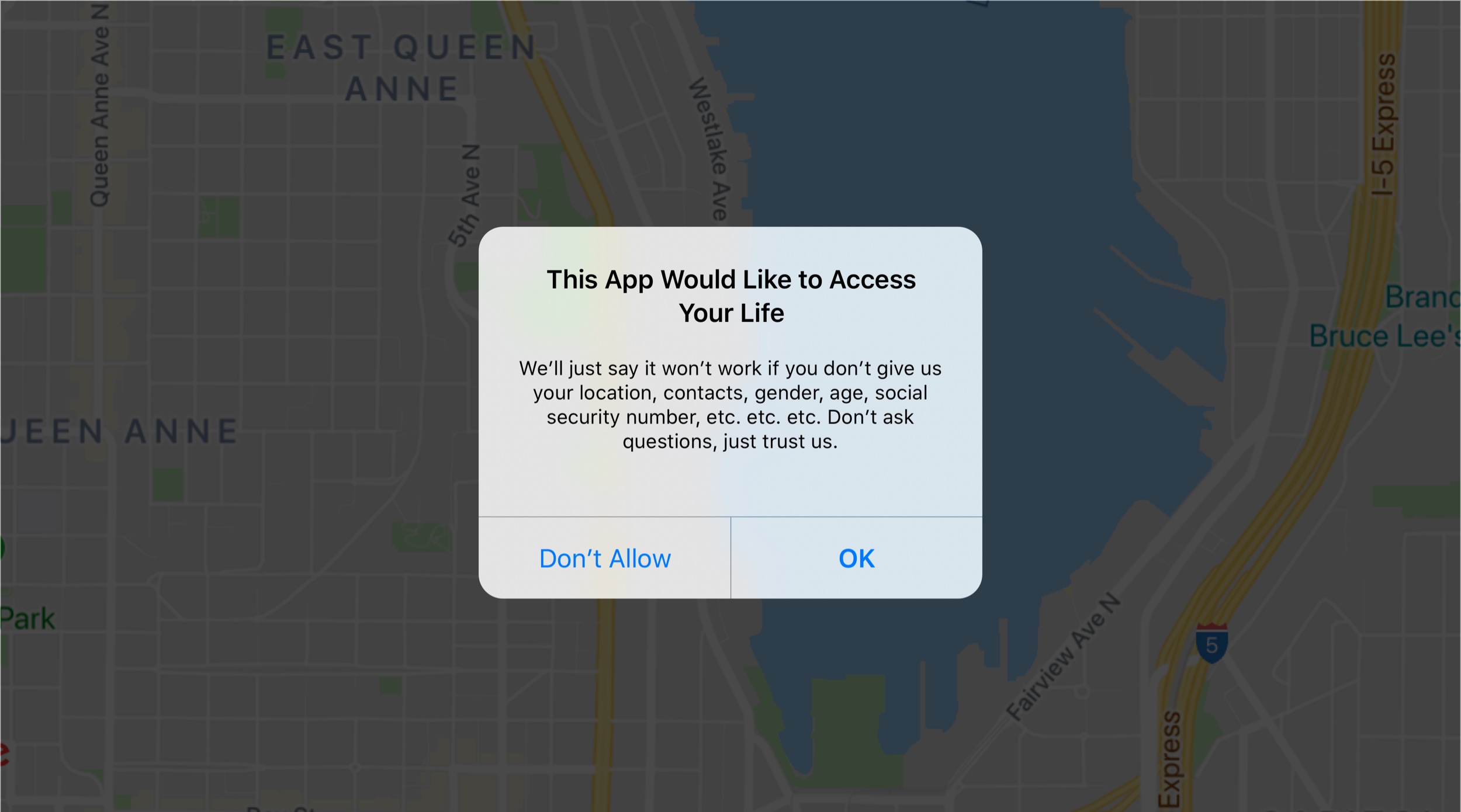
Online clothing retailer Everlane is a company who has managed to represent — in a simple way — to its customers how it makes money from its products through a transparent pricing structure. We can draw inspiration from this to push beyond the simple understanding of “Your data is used to advertise.” Tech companies collect and scrape enormous amounts of data: location, search results, purchase history, and even text and SMS. We need to be ready to ask ourselves: do we actually need access to a user’s location information? For example, ridesharing services work just fine without your location data, but they present language to customers to make it seem like location services is a requirement in order for the app to work. Data disclosures should be as detailed as the data itself, and we need to stop hiding this information through opaque practices or omission. Make it clear to your user in specific terms. If you can’t explain it or don’t want to, then you probably shouldn’t be doing it.
2. Allow your design to explain your algorithms.
The podcast ‘Reply All’ recently ran an episode entitled ‘Is Facebook Spying On You?’ in which people presented anecdotal evidence about talking about random products and then immediately seeing it as an ad in their Facebook newsfeed, causing them to wonder if the microphone in their phone was being used to listen in on their buying decisions. In short, the Reply All hosts concluded that coincidences in newsfeed ads had more to do with the ways Facebook tracks your movement all over the web through an analytics tool called Facebook Pixel. But the suspicion lingers because there is a lack of understanding for what you see in your feed and why. To address this and build trust, we should design space for people to understand “Why am I seeing this ad?” Advertisers, after all, are able to target everyone from ‘new parents’ to people who like both KitKats and Nike shoes. This goes beyond advertisements as well. For any kind of feed, people should have transparency as to why the algorithm surfaces what they are seeing and why. Give options that will reveal these demographics to your end users, and allow them to weigh in and set options on what the algorithm provides them. Some companies are starting to respond to customers’ algorithm frustration. Pinterest just released a feature in which you can view only posts from people you follow (no “recommendations”!) and in chronological order as well. Hopefully more companies follow suit in empowering their customers to take control of their feed.
3. Allow your customers to opt into data collection, rather than opting out of it.
There’s nothing more powerful than the default. Have you ever downloaded a new app, and have seen the notification of all the things it wants access to—like all your contacts? Did it give you pause, but you went ahead and tapped “Allow” anyway?
Uber abused this in the most egregious way, when, in 2016, its default setting was quietly changed to tracking its users all the time, rather than just when they were using the app. Users were outraged by the change, and Uber had to walk it back less than a year later. Designers need to insist on transparency about users’ privacy settings, and solutions that allow users to opt in, rather than opting out of data collection. This forces our organizations to justify the need for data rather than just collecting it because they can. Zeynep Tufekci, a professor of Information Science at University of North Carolina, notes: “As long as the default is tracking, and as long as the burden is on the user, we’re not going to get anywhere.”
4. Examine and consider how bad actors could use your system. Then prevent it, prepare for it, and be ready to react in real time if it happens.
Designers often seek to change, update or tweak features with the best of intentions and inadvertently expose users to risk, exploitation or abuse because not enough time and resources have been invested in understanding the possible impact of change. In 2017, Twitter quietly removed notifications to users that they’ve been added to lists. After worried users raised issues — I want to know, as a woman, if I’m added to a misogynist troll’s hate-filled list of women they hate — Twitter’s safety team backtracked after only two hours. It’s a reminder that designers need to consider how the worst person you can think of might use not just your platform, but your features, and that includes your privacy settings, notifications (or lack-thereof), and, in a last example, rolled-up location tracking. This is why creating transparency not just about what you’re collecting, but how you will eventually use that data is so important.
5. Media literacy matters. It’s time we prioritized data literacy.
Media literacy matters because it enables people to discern reputable information, seek out sources and make wise decisions about the content they consume. We should apply that same logic and advocate for data literacy, an active form of transparency that educates people on the full truth of data collection so that they can be empowered to make proactive decisions about the information they share. If we implemented the principles outlined above, the result would be a drastic increase in communicating what data is being collected and why, as well as increased control of what people can opt into and how they can manage the algorithms that shape their experiences. Designing for data literacy would represent a significant shift in how data is conveyed today, moving us away from an opaque understanding of the most basic “free platform in exchange for data” transaction that has left so many users feeling distrustful, confused and surprised by the actions of social media platforms.
Sunlight is the best disinfectant
After trusting enormous amounts of their personal information, it’s easy to understand why social media users are starting to question if the deal was worth it when so many services have managed to abuse and break that trust in exchange for revenue. Unless there are changes to the way we communicate data collection, algorithm decisions and advertising models, trust will continue to erode. And that’s where designers can use their skills to help take responsibility for how we are collecting and using people’s data and help restore trust. If what you are doing gives you pause as a customer, you should respond to that feeling. We need to reaffirm our position as user advocates, which has always been the key to being a good designer in technology, to design for transparency and data literacy just as often we design for joy, delight, and engagement.
In the anti-corruption world, there’s a saying that sunlight is the best disinfectant. Let’s let go of the opaque practices that harm our users and add sunlight to our design work.
We recently got the chance to sit down and roll up our sleeves with Splash, an organization dedicated to bringing sustainable sanitation, hygiene education, and clean, safe water to children around the world. Together, we explored ways we could make their drinking and handwashing stations more durable, engaging and usable in settings where the challenges are numerous, from orphanages in China to resource-strapped schools in Ethiopia.
As designers, we relish projects like this because they are rooted in impact and purpose. It’s not about creating the shiniest, sleekest product possible. It’s about understanding the lives of the children who will use these handwashing stations, seeing the world in which they live, and designing solutions that are built to be used and built to last. Designing for social impact requires us to turn challenges and constraints into insights and inspiration, and we’ve found that by drawing on context, harnessing the power of human behavior, and staying humble and curious, we can always find new ways to deliver results for the people who need them most. Splash lives this ethos in the work that they do, and use this mentality to create real impact in the communities they serve around the globe.
https://www.instagram.com/p/BXtLhNYFdLV
Don’t fight the system
A clean water station seems like a simple thing. But there is always a bigger picture at play, and we must consider unique systems, customs, and environmental factors beyond usage. By understanding the larger system in which it works, Splash is an excellent example of an organization that successfully scales its solutions far beyond the individual stations to include things like parent and teacher trainings, school funding, soap drives, and celebrations of global handwashing days. This hybrid of a human-centered design strategy and a systems-level approach moves beyond tackling one problem at one pain point and empowers designers to design for social change.
Keep it simple
Employing simple behavioral economic strategies can be one of the most effective tools in a designer’s arsenal, especially when resources are limited. Splash learned that many of the students they worked with were not accustomed to having regular access to faucets or soap and that employing simple behavioral nudges like positioning mirrors over the basins at child-height increased handwashing rates from 9.4% to 65%. We worked with Splash to develop similar concepts like creating areas on the basins that students could customize with artwork and rotating the sinks 45 degrees so that users faced each other while using the taps because when children can see each other as they wash their hands, they are more likely to use the stations.
Photo credit: Splash
Stay humble and curious
As part of our partnership with Splash, we facilitated a Behavioral Change Summit where members from word-class design firms, non-profits, public health companies, and research institutions were invited to think up ways of improving the drinking and handwashing stations. Situations like these require the acknowledgement that everybody is an expert and nobody is an expert. Remember to listen and consider what you hear, be humble, build off of each other’s unique life experiences and strive to make the people who will use the product the priority in all things. While it may be tempting, you simply can’t parachute into a design problem and employ methods that worked in other situations. In fact, creating a successful innovation sometimes means dropping the pretense of being super innovative all together and starting back at square one.
Photo credit: Splash
At Artefact, we are always grateful to get the chance to think meaningfully with organizations like Splash. It inspires us to dig deeper into the world around us, reflect on how humans can be empowered within larger systems at play, and seek out the right mix of innovation and practicality. Keep an eye on Splash and the amazing work they do—we will keep watching and drawing inspiration from the way they bring their purpose and vision to life for children all around the world.
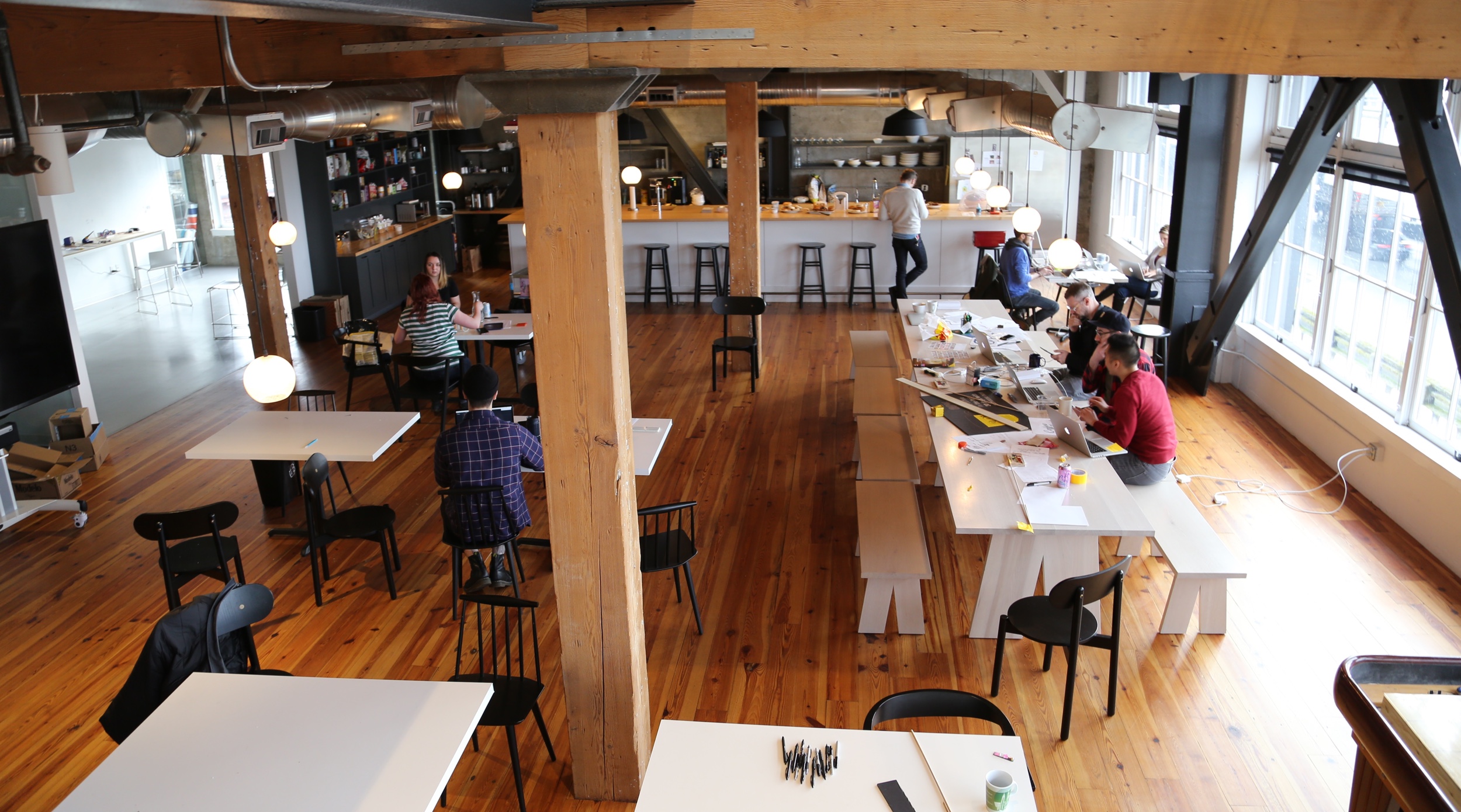
Twice a year, Artefact employees take 24 hours to team up for the Artefact Hackathon to see what they can create using everything from open source software to pipe cleaners. At the end of the 24 hours, we are always left with a giant mess, leftover pizza, mild sleep deprivation, and many, many awesome ideas.
Our latest Artehack was no different. Each team rose to a unique challenge, resulting in everything from a Roomba built for disaster relief to an AI-enabled confessional for the future. However, two Artehack projects tackled a subject particularly close to us as a company: alleviating homelessness. As part of the Seattle community, Artefact is invested in finding ways to improve the homelessness crisis, such as our partnership with the Seattle Mayor’s Innovation Team to create solutions for homeless youth. These two hackathon projects are just prototypes, but demonstrate that people can use design thinking to solve tangible problems as part of tackling the larger challenge of homelessness.
How might we cut down on food waste and increase food bank donations?
Grocery stores and supermarkets account for 16 billion tons of food waste per year, much of which is perfectly good food cleared off shelves for stocking purposes. Meanwhile, food banks and homeless shelters depend almost entirely on donations, with little way to control what food they receive and when they receive it. One hackathon team wondered: What if food banks could proactively request the kinds of food they need and connect with grocery stores clearing stock?
A pile of foamcore and a handful sensors later, the team created an program that allows food banks to select and receive the kinds of necessities and food they need most. Food banks use an app to select their most needed food items, and the app pushes the request to local grocery stores, who can then place the items in a cart. Once the lid on the cart is closed, sensors within the cart push a notification to the organization that their food is ready for pick-up. The food bank can key in an access code on the cart and receive fast, local, and fresh food donations.
How might we make it easier for people to help the homeless?
Although the goal for many homeless people is long-term access to housing and resources, there is huge demand for necessities and essentials that can make daily life easier and safer. At the same time, we know that many Seattle residents often feel at a loss for how they can make a difference given the size and scope of the homelessness crisis in Seattle. The intersection of these two issues inspired one hackathon team to create The Bene Program, a giving campaign that empowers people to fund tangible items that help the city’s homeless population.
Here’s how The Bene Program would work: pick up a Bene Card at a local retailer and top it up with a pre-paid amount. As you go about your day in the city, you can tap your Bene Card on customized card readers around town that promote the funding of specific programs and essentials. For instance, tapping your Bene Card at the dog park would fund food and care for the pets of homeless people, tapping at the bus stop would help fund transit cards, and tapping your Bene Card in a public restroom would fund hygiene products. At convenience and grocery stores, Bene Card donations would fund essentials and food being placed into the Bene Box, a cabinet accessible for the homeless to take things like food, water, and first aid supplies. Use the companion app and website to check your donation totals and top up your balance, and participating organizations can use the card system to arrange for corporate donor matching. The result would be direct, community-based fundraising that makes it easier for Seattlites to provide resources and essentials for neighbors in need.
Hackathons always leave everyone at Artefact with a few new skills and good inspiration to take into our design work. This hackathon was no different, and we are heartened by the creativity and thoughtfulness each team brought to their challenges. We may not have finished final products, but both the food bank cart and Bene Program prove that all you need for a good idea is some hot glue and great teamwork.
Using self-driving cars to roadmap a safer transit system
When most people imagine a safer future involving autonomous vehicles, the thinking is often focused on the capabilities of the cars themselves, varying levels of autonomy, specific safety features, and the passenger experience. However, if we look beyond the car to include the many players and platforms involved in the transportation system as a whole, a more significant opportunity emerges: the chance to design a fully integrated solution that gets better as the network grows.
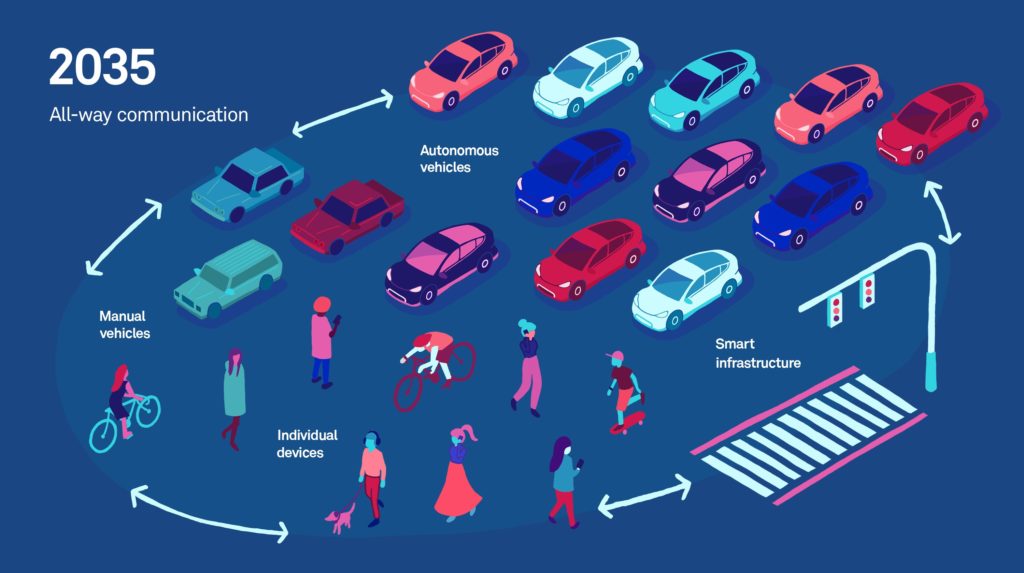
We examined how a long-term strategy could align multiple layers of devices, products, platforms, and environments to work together over the next 15-20 years and evolve as technology matures, policy advances, and infrastructure keeps pace. To illustrate this holistic approach, we envisioned how a single intersection might look in 2020, 2025, and 2035 to show how a systems-level strategy for autonomous vehicles would lead to safer outcomes for people, business, and society.
2020: Improved reaction
Within a few years, semi-autonomous vehicles will be able drive themselves in stable traffic and intervene if human drivers encounter dangerous situations. At a typical intersection, imagine that a pedestrian named Cassie absentmindedly strolls through a crosswalk during a red light because she’s focused on her phone. Driving along in his semi-autonomous car, Mike doesn’t see Cassie because it’s dark outside. Fortunately, Mike’s car detects Cassie in its path and self-brakes to avoid hitting her. At the same time, the corner streetlight senses Cassie illegally crossing the street. It illuminates the crosswalk more brightly and flashes warning colors to alert oncoming drivers. Cassie notices the warning illumination, looks up and sees Mike’s approaching car, and scurries back onto the sidewalk. In this situation, improved sensing systems and coordinated response are the first step toward an integrated system.
2025: Co-ordinated response
By 2025, autonomous vehicles that can drive themselves in most urban environments will share the road with both semi-autonomous and manual vehicles. While it will take some time to adjust to new driving customs and right-of-way, connectivity and regulation will help to lower the risk of collision. In this scenario, Cassie on her way to happy hour with friends. Having learned nothing from her near miss in 2020, Cassie is about to jaywalk during a red light and doesn’t notice the self-driving car that has turned into her path. Fortunately, the self-driving car is adhering to automatic speed limits and is traveling at a lower legal speed than manual vehicles and has enough time to detect Cassie. The car also pings an alert to Cassie’s phone, which instantly rings and replaces her messaging app with a warning screen. Noticing the warning, Cassie does not walk into the street with oncoming traffic. Through two-way communication, the self-driving car and Cassie’s personal device work in tandem to avert a collision. Here, greater degrees of connectivity between multiple devices and platforms increase the fidelity and performance of the system.
2035: Automated prevention
By 2035, public and private organizations will partner to fundamentally change the way we move about in cities. They will leverage data to reshape our urban environments, including separate zones and traffic rules for autonomous vehicles, pedestrians, and other modes of transportation. This time, Cassie is running late to a meeting and decides to cross a vehicle-only street to get to her destination. The first oncoming car triangulates Cassie’s movements by tracking her personal device. It predicts that she will soon be in its path and immediately stops. To avoid getting rear-ended, the car transmits a warning to all other self-driving cars on the street, directing them to slow down. At the same time, cars that are about to enter the street are re-routed by the city infrastructure to avoid congestion. Cassie eventually crosses the street, but does receive a ticket for her traffic violation and vows to do better in the future. In this phase of development, near-universal connectivity and integrated infrastructure will allow self-driving cars and cities to predict and mitigate potential risks, influencing behavior and creating preferable outcomes.
To enable this future, there will need to be significant alignment and collaboration between corporations, government, and society to ensure that our collective interests are prioritized over any single platform, product or technology. The journey begins now, while the technology is in its formative state, and before today’s decisions become tomorrow’s standards.
Artefact’s first official hackathon was a whirlwind of coding, prototyping, and plenty of duct taping. In 24 hours, 60 Artefact employees worked around the clock to create 13 different products with one theme: making Artefact the best place to work. Needless to say, it was a huge success and lot of fun (Not to mention a giant mess.)
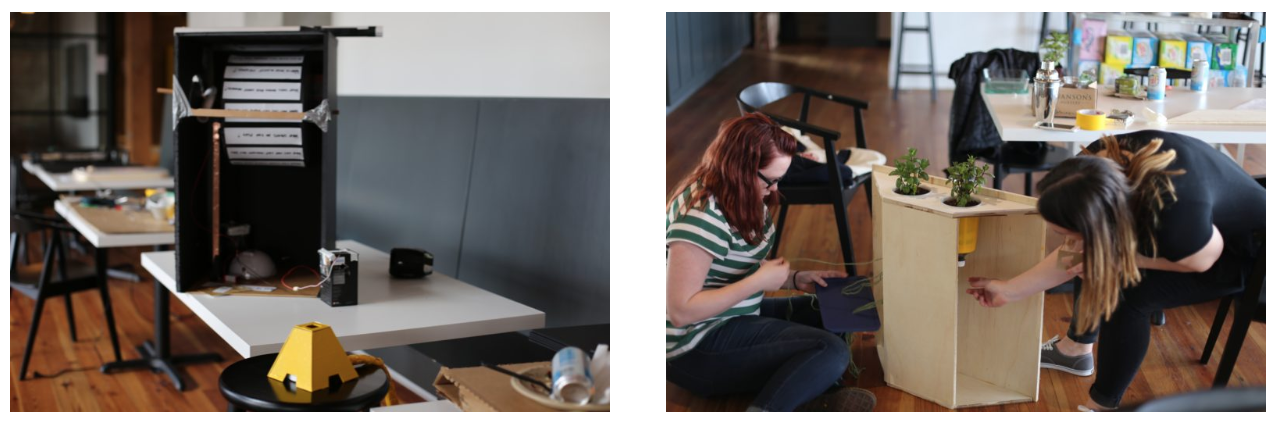
Some teams took the high-tech approach and hacked together Arduinos, motion sensing cameras, Raspberry Pi, Amazon Alexa, and Slackbots to design office improvements. Team Spicy Pork created The Bar Cam, a connected camera that uses sound and an Amazon Echo Dot to trigger photos and time lapse video of happy hour and then notifies the office of what’s happening in the kitchen via Slack integration. Thanks to Team District 13, our front desk now has a smart piggy bank that senses donations and uses an Amazon Echo Dot to report where contributions will make a difference.
Voice commands were a big theme in many of the projects, so much so during judging, commands to one Alexa often set off several submissions at once!
Other teams kept it analog and old school by blending design solutions with everyday items. The kitchen dishwashers now have a 3D printed sign that indicates whether they should be emptied or filled, and one team created a self-watering garden of mint which will take our mojito game to the next level. Using cardboard, pipes and wood, Team Lucky Lunch created a working slot machine that pairs people off for lunch and even makes the mechanical “click-click-click” sound that makes playing the slot machine so satisfying.
Like the Lucky Lunch submission, many of the projects created during Artehack ’17 focused on helping employees connect with each other, carve out time for new relationships and get to know one another outside of the normal project teams. Using NFC stickers, poker chips and even a few mousetraps, our shuffleboard table has been transformed into a game called Coffee Time that pairs people together for grabbing an afternoon espresso. Near our elevators, Project Lunch Buddy is a set of old airplane seats typically used for travel prototyping that have now been rigged to light up when someone wants to go to lunch. One team even created our own Artefact Slackbot named Artie, who starts threads between random employees and sparks conversations with icebreakers.
After the dust settled and the submissions were judged, one team emerged victorious. Staying true to the prevailing theme of creating connections and building relationships, Jackson, Felix, Kris and Michael created an Alexa-enabled trivia game called ArteFacts. Start the game, and Alexa will ask you trivia questions about the people of Artefact.
Amazing projects aside, the true measure of our first Artefact Hackathon was seeing all of our people band together, get their hands dirty, and apply their passion for design and tech to improving our studio. Based on the amount of fun we had, Artefact is already a pretty exceptional place to work—minimal hacking required.
For the second year in a row and third time in four years, we’re thrilled to announce Artefact made Seattle Business Magazine’s Best Place to Work list! Making this list each year is becoming more and more competitive, but the competition only drives us to raise our bar so we can continue to better serve our employees, clients, and community.
Each year, we reflect on things that are going well and focus on areas needing improvement in the studio and in client work. We frequently ask our employees and clients for feedback and hold ourselves accountable to make changes to the areas that need to evolve. We understand, that in order to be prosperous as an organization, it is essential to take the time to listen to this feedback and act on it. The 100 Best Companies List means a lot to us because it is driven and determined completely by employee feedback, so to make it on the list means our employees are speaking up and sharing what they love about working at Artefact.
It is truly an honor to receive this recognition. This year, instead of writing about Artefact, we wanted employees to speak for themselves and share why they love working here:
I love Artefact because (just as with our client work) people are at the center of everything we do. I’m supported through mentorship, empowered to grow professionally and contribute to my community, and connected to my colleagues in fun and meaningful ways. We get to tackle interesting and diverse projects, and I’m especially proud of the work we do for social good and underserved communities.
Joan Stoeckle, Design
I like that Artefact is a small company that always tries to figure out how to change for the better. Most companies resist change until it becomes too late, but Artefact is always hacking itself. I’ve been at a lot of companies and this is the only one that I’ve worked at that is serious about self-analysis and growth. It’s truly a learning organization.
Sheryl Cababa, Design
Artefact attracts great projects and the amazing talent who want to change the world, learn from each other, elevate themselves and those around them. The company itself is an exercise in great user experience, looking at pain points and iterating our approach to create a culture where you can do your best work.
Jon Mann, Design
Artefact consists of a group of skilled, passionate, inspiring, well rounded individuals that are always motivated to learn from each other and have an impact in the community. We yearn for the challenge to craft amazing things and we look for opportunities to design for a better future. What makes us stand out from other organizations is that we genuinely care and respect each other. As an organization, we do all we can to support each other through career and life obstacles. We create opportunities and provide the right tools for our employees to thrive as consultants. The key to Artefact’s success is our people and we don’t take any of our talent for granted. We value the unique aspect each individual brings to the table, and together, we’re a stronger company for it.
Over the course of history, great design has embraced and thrived in this wicked complexity and has helped create products and services that have contributed to solving some of these “wicked problems”—take for instance the invention and global spread of the polio vaccine. But as the world faces massive and widening disparities, we are challenged to go beyond designs that simply improve the lives of people who use them. We are called, instead, to make change for societies as a whole. To design for social change.
Recognizing the interplay of systems and humans
Wicked problems can easily swallow our collective ambition with their magnitude. Historically, they have been tackled through systems thinking approaches by policy makers, economists, and civic organizations. And this approach of laws, government initiatives, and global nonprofits has worked for some of the massive social changes in our recent past, such as equal voting rights or the near-eradication of polio. The outcome of this approach is a sweeping wide change, initiated from “above.” Effective for huge movements, the success of this approach often is undermined by slow adoption or cultural inappropriateness.
That is where human-centered design (HCD) comes in. We have seen a recent focus on approaching the same challenges through the lens of the individual’s experience. HCD ensures that the solutions take into account the motivations, needs, and values of the impacted individuals. Recognizing its merit, large social change organizations like the Bill and Melinda Gates Foundation and the World Bank have publicly championed HCD as a key contributor to improve the state of the world.
But social change requires as much system redesign and changes in individual behavior as it requires transformative change in cultural and societal norms. And that is where the interplay of the systems approach and the human-centered design approach comes in. Yet, while we have developed exhaustive frameworks for how each of the approaches works, we are nascent in our understanding of how they must complement each other to tackle wicked problems.
As designers, who desire to contribute to social change, we have to recognize this interplay between systems and humans. To put it simply, every time individuals act, they contribute to the running of the system, in which they exist with their neighbors. For instance, in this country, our democratic system of government is meaningless unless we are able to act in democratic ways that signal democracy: the freedom to vote, purchase, and speak as we choose.
A framework for designing social change
A key to designing social change is a deep understanding of how the design of experiences must drive individual actions, which, when performed by many individuals, drives wide-scale, societal change. For instance, when one family from a poor and rural environment takes the action to send their daughter to school, and a hundred families do the same, the outcome is often fewer child marriages, lower birthrate, increased access to credit, and many other factors that contribute to a more equitable society, or social change for the better.
To design effective experiences that achieve positive social change, we need design principles that integrate the systems and HCD approach:
Principle 1: Agency
Agency is a belief in one’s capacity to influence their own thoughts and behavior, no matter how small. It is the belief of a parent that they are able to make the decision of whether to send their daughter to school or not. As designers, we have to ask ourselves: Are we providing users, especially those who are underserved, or marginalized in society, a sense of agency that is appropriate within the context in which they live?
HCD tenets such as the need to start with empathy-building, and tools such as user needs assessments, provide a starting place to understand the individual, or the parents’ current situation of agency. Systems thinking tools like social network analysis help us describe the actors in the parents’ network, characterize their relationships, and understand whether interactions between key people stand in the way of providing agency.
Principle 2: Access
Designing for access means designing experiences that utilize the tools and services readily accessible within one’s day-to-day life. Access means making it easy for a user to do something, because few barriers stand in the way. Both HCD and systems thinking provide methods to understand what’s available and what opportunities exists to increase access. Similarly, systems thinking can uncover how issues of access are interrelated. We might uncover that in a typical month, parents can’t predict whether they will have enough to pay for school fees. What contributes to this financial instability includes a lack of access to credit, due to a lack of safe lending institutions, which don’t offer service to people in rural environments because they don’t have formal identifications, and therefore repayment tracking is hard to ensure.
Principle 3: Action
Lastly, no experience can achieve social change unless individuals can take action easily. Designing for action means understanding how humans behave and leveraging findings in behavioral economics and psychology, to steer the individual toward the desired behavior. Systems thinking tools like change matrices help designers narrow down the change we are trying to affect, while HCD tenets around prototyping allow us to ensure that once solutions are put into the marker, users can and will take action easily toward that change.
Principles at Work
Whether you are designing a campaign, a service, or a product, when applied successfully, these principles can result in a significant social change—just take a look at Black Lives Matter, HealthPartners, and MicroEnsure. Integrated into their solutions, intentionally or not, are the design principles of agency, access, and action.
Black Lives Matter Wicked problem: Racial prejudice Type of design: Campaign
Black Lives Matter, a national organization with chapters in cities across the U.S., seeks to “(re)build the Black liberation movement.” It began in 2012, as a reaction to George Zimmerman’s acquittal for killing 17-year-old Trayvon Martin and has become a strong voice in the struggle against institutionalized racism. In this context, we refer to it as a campaign that strives to impact social change.
The campaign has been successful in raising an issue and encouraging discourse on a topic that has long been taboo within American culture and media. From bringing nationwide attention to issues of police reform into the presidential spotlight with conversations with Hillary Clinton, the creation of more than 31 chapters across the entire U.S., and to widespread Twitter conversations between hundreds of thousands of followers, there is no doubt that the movement has become a flashpoint of American awareness. This success can be attributed not just to the obvious accessibility of the movement, which is fueled in large part by online participation, but also because of the agency and action integrated within BLM as a campaign.
By leveraging the ubiquitous smartphones we have in our pockets, BLM is a movement that galvanizes those protesting in person with an online community of those participating online. Participants have recorded incidents in real time and thrown their collective force behind stories that need to be seen, shaping national media attention. This online activity, in turn, reinforces and supports the traditional protest actions taking place around the country.
BLM avoids mere “clicktivism” by promoting the belief that taking control of the content and stories of injustice that are captured and shared can be a catalyst for change. The point of participating in BLM discourse online is not to simply add a hashtag or click “like,” but to change the narrative of the media, by becoming the media. BLM is not merely accessible online, but as a campaign promotes agency and action by providing both real and online protest spaces for participants to choose how to take action and to demonstrate their care and concern for black lives.
Other campaigns of today’s politically charged spotlight could benefit from greater awareness and traction if principles of agency, access, and action were applied. Imagine if working mothers and fathers, both low and mid-income, had the agency to demand paid family leave? Imagine if they could access stats and stories that demonstrate the injustice, and the impacts to our children, with the click of a button? What kind of action could we all take to make politicians unable to drown out our collective voice?
MicroEnsure Wicked problem: Massive financial risk Type of design: Product
MicroEnsure is a product that provides reasonably priced and easy-to-use insurance products to people in the economically developing world. There, 5 billion people live on about $5 a day, with incredible risk. People live close to the edge, where illness or accidents easily send them tumbling back into poverty.
In Kenya, for example, MicroEnsure works with local insurance companies, such the Pan Africa Life Insurance LTD and the mobile carrier Airtel, to provide free insurance products, including life insurance, coverage for accidents, and hospitalization. Benefits, such as reimbursements on hospital stays, can be increased based on how much airtime, or mobile minutes, individuals use. The design of MicroEnsure’s service gives its users a sense of agency by bundling the service with airtime, a product that is familiar and people have been confidently using for years. Bundling insurance with airtime perpetuates the belief that “if I’m able to buy airtime, I can probably get insurance too.”
By partnering with local insurance companies and the mobile carriers, MicroEnsure is able to provide free, minimal insurance even to those who have never had or considered it before. And by using the mobile phone kiosks as the access point for insurance services, such as claims payment, MicroEnsure has made insurance services accessible, fitting into the places and routines that its users already partake in. Lastly, MicroEnsure has made taking action easy. Even in disaster situations like hurricanes, insurance representatives go out to the affected areas and are available to take claims. This boon in customer service is especially relevant to underserved audiences: MicroEnsure recognized that figuring where and how to get insurance claims is a necessary product requirement for their customers, who often live with massive financial instability.
The success of MicroEnsure is evident in its numbers; 43 million registered customers in parts of Africa and Asia, with almost 20 million new customers in 2016 alone. But the individual stories of positive health impact are more impressive. When Hassan, a Nigerian business owner living on less than $4 dollars a day, injured his hand, his insurance was able to cut half the cost of his treatment.
HealthPartners Wicked problem: Childhood obesity Type of design: Service
Minnesota-based HealthPartners is a not-for-profit health care provider that serves approximately 1.5 million members. They have been intentionally addressing the issue of childhood obesity for more than 10 years. One of their programs, PowerUp Kids, is a six-week challenge that provides information to administrators in 26 schools to help them encourage over 10,000 students to make better decisions about their own health. The program has had over 90% participation.
The program is designed to provide agency for both administrators and students by allowing them to choose ideas of how to better their own health rather than prescribing a solution that may not be relevant or interesting for a particular school culture. Ideas that admins and students have come up with include: substituting ways to celebrate birthdays with fun activities instead of unhealthy treats, letting kids eat breakfast in the classroom at the start of the school day, and scheduling recess before lunch so kids can work up an appetite. Recognizing that school is the hub of life for many families, by rolling out this program in schools where children go everyday, HP has designed an experience that is accessible for children and their role models.
The principle of action is also well-integrated into the design of the service, as the program integrates behaviors into activities that students are already participating in such as recess, or celebration, providing administrators and students easy ways to take action.
Both MicroEnsure and HealthPartners’s PowerUP Kids demonstrate how we can apply the three principles in ways that are relevant for the culture in which their customer lives. Imagine if health providers here in the U.S. thought about designing for agency, access, and action for those that are underserved—single mothers, low-income, new immigrants, seniors, and more. How would typical health services such as vaccinations and cold and flu visits be set up for better access with longer hours or free transport? How would we encourage a sense of agency by making getting medical treatment as familiar as going grocery shopping? What opportunities exist to create more micro actions to care for one’s health? The possibilities open up when thinking about design with this framework.
The role of technology
As designers and other experts with unique lenses on the world join forces to tackle the wicked problems we face, it’s easiest to default to creating apps expecting that technology adoption can save the world, an idea sometimes referred to as Silicon Valley solutionism. To avoid solutionism, and truly work toward social change, we need to recognize the complexity of ourselves as individuals, and how our actions together create culture and society. The interplay of systems and human-centered thinking offers the right tools to understand the context and issues from both a societal and user perspective, allowing us to identify outcomes we are striving to change. The principles of agency, access, and action offer a new framework to design for the complexity of these wicked problems, for the inequities between the under- and well-served and the cultural context in which they live. It is only with a new mind-set that we can truly design for social change.
Smart cities cycle: Building bike culture with behavioral economics
May was Bike to Work Month at Artefact, and together we pedaled nearly 500 miles commuting to and from the office. Bike to Work Month is always exciting because so many people at Artefact are passionate about cycling: Sheryl brought her beloved Dutch bike when she moved from Amsterdam, and Holger even builds his own bikes. In May, I took a trip to Amsterdam and Copenhagen to experience the cycling culture and infrastructure in both cities firsthand (as well as eat a million stroopwafels, mission accomplished).
Somehow during all of my time in Amsterdam and Copenhagen, I did not get a single photo of me actually riding a bicycle. I did, however, get this photo hugging a cat in a bicycle rental shop. (His name was Chris, he was wonderful.) Just take my word for it, I rode a bike a lot.
Our passion for bikes goes beyond the personal. For cities looking to solve community issues with smart solutions, it’s hard to imagine a single product that comes as close to being a silver bullet for smart cities than bicycles. The benefits are clear: investments in cycling reduce car congestion and improve public health, thanks to the increase in exercise and decrease in air pollution and automobile accidents. Cycle-centric cities are not only safer, but they make cities more accessible for people from all economic levels and connect communities rather than divide with highways.
We know that choosing to prioritize cyclists the way we prioritize cars and pedestrians can fundamentally shape a city for the better. In the 1960s, Copenhagen made proactive choices to design roadways and communities to encourage safe cycling, and today the city reaps the rewards of putting cyclists first. Fifty percent of all Copenhagen residents commute by bicycle, and the city has been deemed the World’s Most Bike-Friendly City and the World’s Most Livable City— and the connection between the two is no coincidence.
A famous example of cycling infrastructure, the Cykelslangen (“Bike Snake”) Bridge in Copenhagen. Photo credit: Danish Architecture Center.
Becoming a world class cycling city like Copenhagen requires extensive urban planning and investment in significant cycling infrastructure. But as many cities look to smart solutions to improve their communities, there are achievable and incremental actions cities can take today to build a cycling culture that will support a smart city ecosystem.
Behavioral economics for bicycles
At Artefact, we often deploy “behavioral nudges” in our design work— subtle suggestions that direct people toward taking positive or preferred actions. Building a network of bike lanes takes time, but cities can apply behavioral economics to their existing infrastructure today in order to nudge citizens towards cycling.
Cities all over the world are implementing low-tech, low-investment behavioral nudges to increase ridership. Many start with creating space for cyclists in small ways, such as adding secure bike parking at key destinations like grocery stores and ensuring that buses, trains and other transit options have designated space for cyclists to stash their bikes. In Copenhagen, I experienced another behavioral nudge: the bike footrest. The city installed simple, inexpensive railings at intersections so that cyclists have a place to lean while waiting for the light to change. Taken together, all of these are smart behavioral nudges and minor adjustments that encourage more riders and good cycling behaviors.
Behavioral nudges can also be baked into bike share programs to increase their success rates. The city of Hangzhou, China made the first hour of bike share rental free to attract users. On my trip, I preferred using a specific bike share because it used Bluetooth-enabled locks that made grabbing a bike as simple as clicking a button on my phone. Also, as we have learned from my photo, incorporating a cat named Chris into your bike rental shop is an excellent behavioral nudge for encouraging me, specifically, to ride a bike in your city.
Build support with behavioral economics
For any city, moving toward a more cycle-friendly future requires extensive community support and coalition building. We can use the concept of behavioral nudges not just to attract cyclists, but bring businesses and stakeholders along for the ride as well.
The story of the Hackney parklet is an excellent example of incentivizing the support of cycling for the broader community. The London Borough of Hackney commissioned the creation of small, movable mini-park that created a temporary sanctuary for cyclists and could be moved to outside different businesses. With protected seating and parking for bikes, the parklet was an attraction that helped bring more in more sales for participating businesses, rewarding them for promoting cycling.
For cities with a growing cycling culture, an unfortunate friction can crop up between car commuters and cycling commuters. With behavioral economics, we can make cycling a part of city commuting and encourage the car-and-transit populations to incorporate cycling into their routine. The city of York, England made small upgrades to existing infrastructure to increase cycling among commuters. With the “Park and Pedal” program, York created space at their existing park-and-ride facilities for bicycles, which shortened long bike commutes, allowed people to securely store their bikes overnight, and promoted biking within the city center.
The Hackney parklet, a quick-build installation that attracts business by creating space for pedestrians and cyclists. Photo credit Get Britain Cycling.
Rapid prototyping for bike infrastructure
We’ve talked about using behavioral nudges to encourage cycling, but there’s another way cities can experiment with bike infrastructure using a design method: rapid prototyping. Several cities, including Seattle, have had tremendous success with quick-build, rapidly iterated tweaks to existing streets to determine what works best for cyclists in their cities. The organization People for Bikes lays out how cities have used community input to prototype spaces for cyclists with simple paint jobs and temporary objects, then used the experimental spaces to inform more permanent cycling investments.
An example of an intersection in Chicago where cycling advocates reclaimed underutilized infrastructure to quickly experiment with bike-friendly design. Photo credit: People for Bikes.
Bikes: the ultimate tool for smart cities
The benefits of bicycles pay even more dividends for smart cities in the era of connected devices and data-based decision making. Future devices for bikes and cyclists include smart lights that prevent possible accidents, pedal-powered filters that clean air pollution, and cycle-based sensors that report traffic conditions. At Artefact, we developed a prototype called BrakePack, a smart backpack for the urban cyclist that helps reduce traffic incidents. There’s an entire new subsection of technology taking off that cities can dial into in order to improve quality of life for cyclists, drivers, and pedestrians.
As cycling continues to increase in popularity, cities should plan to include cycling technology as part of their strategy to become more smart and connected. By analyzing information gathered by cyclists and bike technology the way we do cars, cities can make more informed urban planning decisions, design effective infrastructure, and prioritize needed upgrades. In the age of IoT and artificial intelligence, the simple bicycle may be one of the most powerful and transformative tools for any smart city.